
Web application · Ruby on Rails
Ruby on Rails agency for your business applications
Business software, CRMs, extranets, e-commerce platforms: Idéematic designs, develops, takes over and maintains Ruby on Rails applications for businesses. It is the technology behind most of our projects, from Techtime to Groupe Quinze.
Definition
What is Ruby on Rails?
Ruby on Rails is an open-source framework, based on the Ruby language, designed for developing web applications. It provides everything needed to build a complete application: data access, business rules, interfaces, APIs, email sending, background processing and tests, organised according to conventions shared by all Rails developers.
Idéematic, an agency specialising in the design and development of business applications, offers its Ruby on Rails expertise for both building and taking over your applications.
For a fuller overview, see the definition of Ruby on Rails in our glossary.
Strengths
Why Ruby on Rails for a business application
Rails is made for web applications rich in business rules that need to evolve for years.
Conventions that save time
A structure common to all Rails applications: development moves faster, and another team can take over the code without rediscovering everything.
A complete foundation
Back end, APIs, back office and interfaces in a single application: on Techtime, Rails powers the mobile app’s APIs and the back office.
Well-kept data
Paired with PostgreSQL in most of our projects, Rails handles rich data models: fine-grained access rights, business states, histories.
Proven building blocks
Authentication and two-factor authentication, state management, full-text search, e-commerce with Spree: maintained gems, integrated into your project.
Real time and background processing
Real-time messaging and updates, scheduled overnight processing, PDF document generation: Rails can do it, without multiplying tools.
Measurable quality
Unit tests with RSpec and continuous integration: the code remains reliable through changes and upgrades.
Case studies
Ruby on Rails applications in production
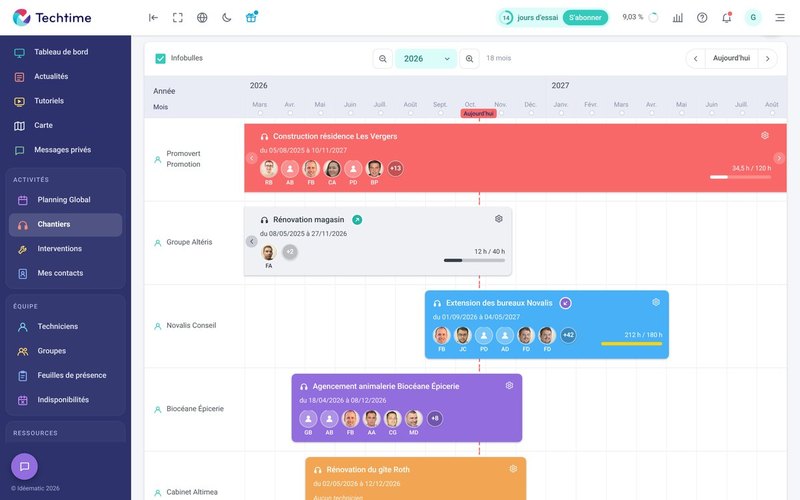 Business software · Ruby on Rails
Techtime, web and mobile business software for the construction industry
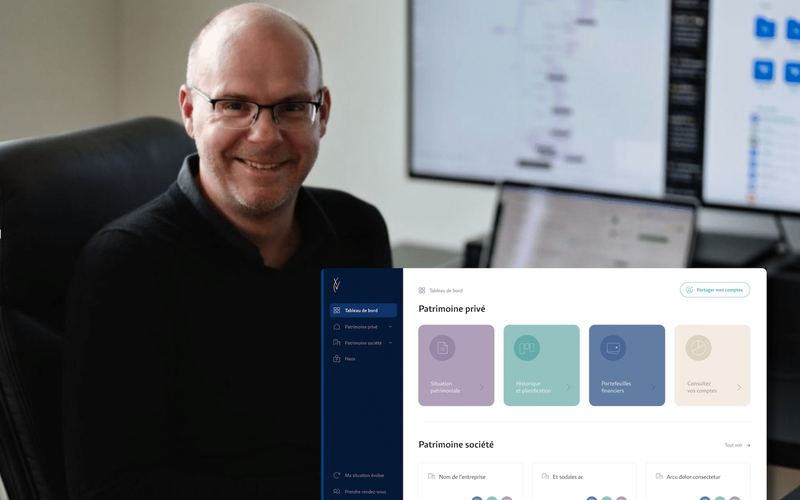 Business application · Ruby on Rails
Groupe Quinze, a complex wealth management platform
 Bespoke CRM · Ruby on Rails
KS Groupe, a CRM for a multi-subsidiary group
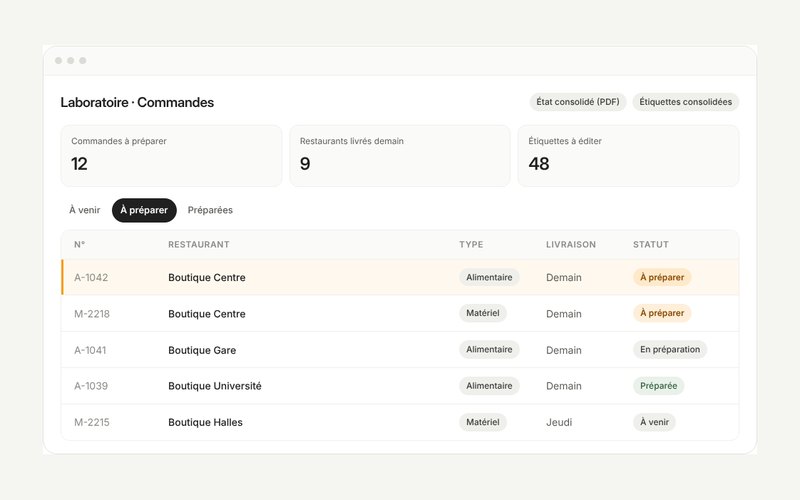 Production extranet · Ruby on Rails
Bagelstein, from shop orders to delivery
 Business software · Ruby on Rails
RE-GROUP, property development software
 Web and mobile · Ruby on Rails
Tailorfin, a web and mobile wealth management application
Also developed with Ruby on Rails: Made in TH, MyInvest, Molli, Bernardaud, Pillivuyt, Assimil, STEPS, Noho, Groupe FED.
Architecture
A Rails application, and everything around it
A Ruby on Rails application is rarely isolated: it serves a mobile app, communicates with your software and automates processes. We design the whole thing.
APIs for mobile
Rails exposes the APIs used by mobile apps built with React Native, as for Techtime, Tailorfin and Noho.
Connected to your information system
Microsoft 365 authentication for KS Groupe, data services and external APIs: the application exchanges data with your tools.
Documents and scheduled processing
Reliable PDFs and automatic processing, such as Made in TH’s scheduled tasks or Bagelstein’s heavy overnight processing.
Takeover and maintenance
Taking over and evolving a Ruby on Rails application
Was your Rails application developed by another team? We can take over technical responsibility for it, then keep it running as part of application maintenance and support.
Audit
A Ruby on Rails audit reviews the Rails version, gems, code structure, tests and performance, as before the Molli takeover.
Upgrade
Rails upgrades keep the application secure and maintainable: Made in TH benefited from one in 2023. See also what is new in Rails 8 (in French).
Migrating to Rails
Several Groupe FED websites moved from Drupal to Ruby on Rails; STEPS was rewritten from a Java application to Rails and Angular.
Approach
Our approach for your Ruby on Rails application
- 1
Scope
Users, processes, data and integrations: the scope and schedule of the first version.
- 2
Design
Data model, journeys, key screens and architecture, with exchanges with your software planned from this phase.
- 3
Develop and test
Interim deliveries, covered by automated tests, validated with your users.
- 4
Deploy and maintain
Go-live, hosting if you wish, then corrective and evolutive maintenance.
Frequently asked questions
Is Ruby on Rails still a good choice in 2026?
Yes, for web applications rich in business rules. The framework keeps evolving, with Rails 8, and has been used for applications in production for many years. Its conventions also make it easier for another team to take over an application.
Is Ruby on Rails suitable for a complex business application?
Yes. Groupe Quinze, KS Groupe, RE-GROUP and Techtime run on Ruby on Rails: fine-grained access rights, numerous business objects, states, documents, integrations and mobile apps.
Can you take over an existing Ruby on Rails application?
Yes. We start with a Ruby on Rails audit (version, gems, code, tests, performance), then take over the application’s maintenance and enhancements, as with the Molli shop.
Our application runs on an old version of Rails: what should we do?
An upgrade needs preparing: dependency audit, step-by-step update and tests. It keeps the application secure, compatible with recent Ruby versions and easier to evolve.
Which database do you use with Rails?
Most often PostgreSQL, as for Techtime, Groupe Quinze, KS Groupe and MyInvest, supplemented where needed by Redis for certain processes.
Can Rails serve a mobile app?
Yes. Rails exposes the APIs used by the mobile app, built for example with React Native: this is the case for Techtime, Tailorfin and Noho.
A Ruby on Rails project?
New build, takeover or upgrade: tell us about your application and your challenges, and we will propose the right approach.