
Réalisation · Business application
STEPS, web software for solving complex problems
STEPS is a methodological tool developed for INSA Strasbourg to analyse products, technical systems and processes. Idéematic redesigned its user experience and then completely rewrote the existing Java application to make it available on the web.
In brief
INSA Strasbourg
- Business
- National Institute of Applied Sciences
- Our involvement
- Business application, Web application
Steps
Structuring the analysis of complex systems
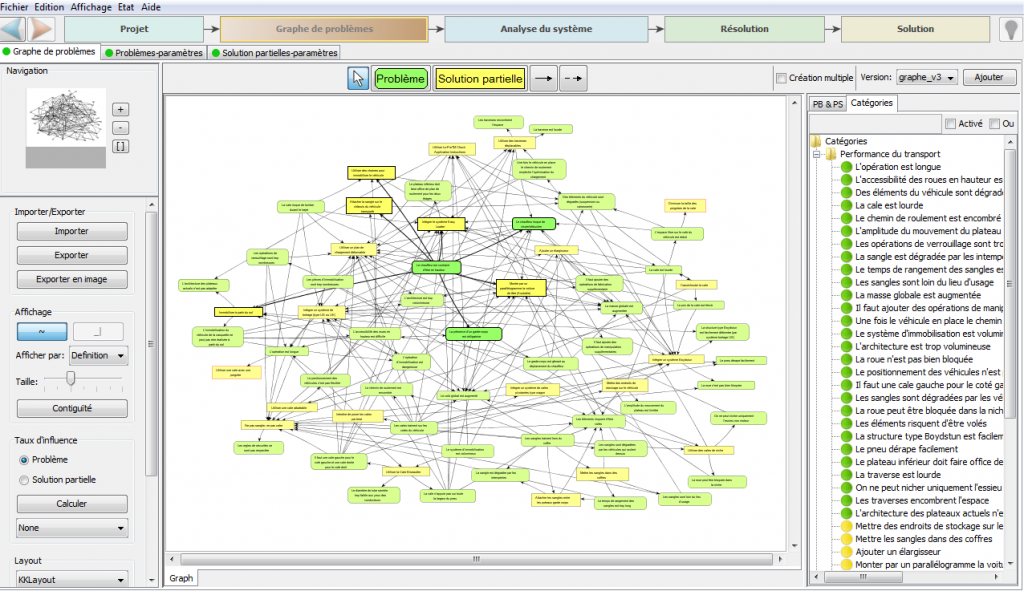
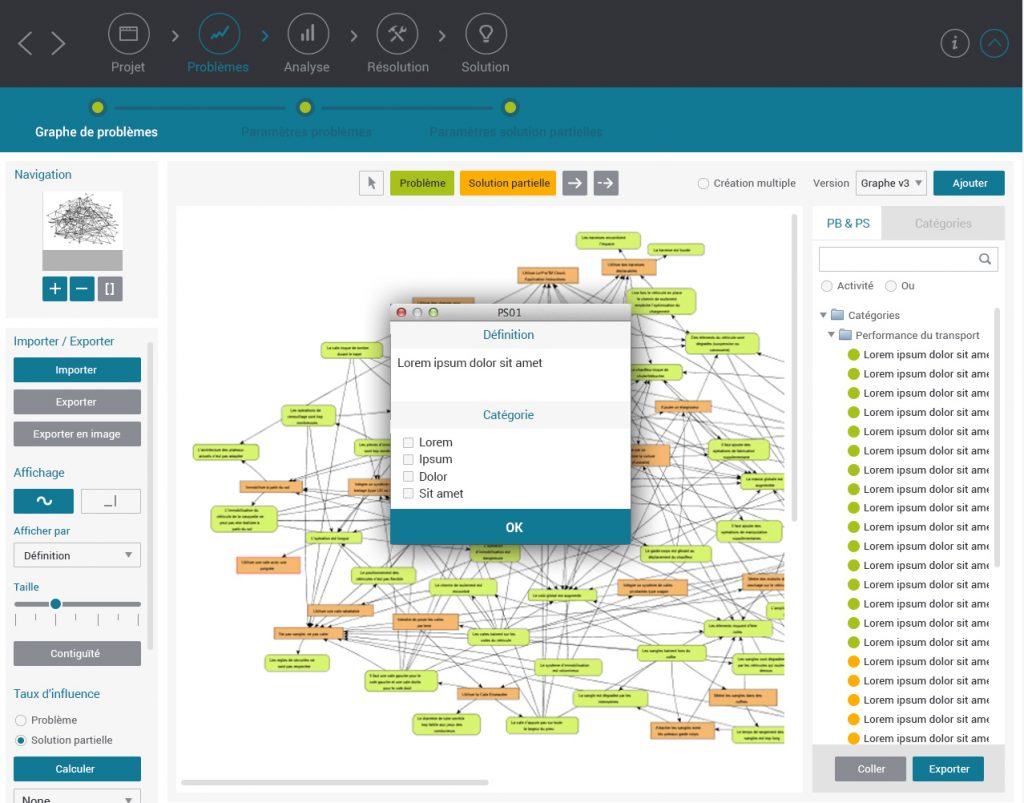
STEPS is designed to analyse products, technical systems and processes based on the knowledge held by the company’s experts. They formalise their experience as problems, partial solutions and relationships between different elements. Together, these build a knowledge graph representing the state of the system under study.
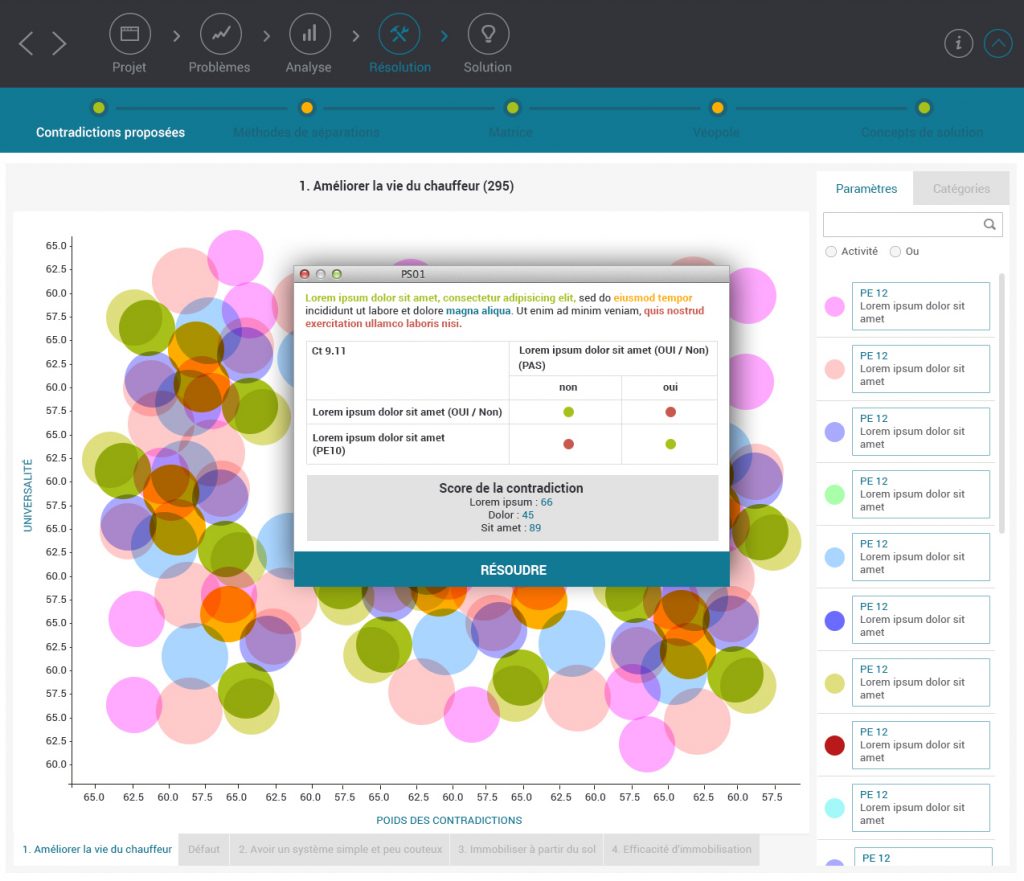
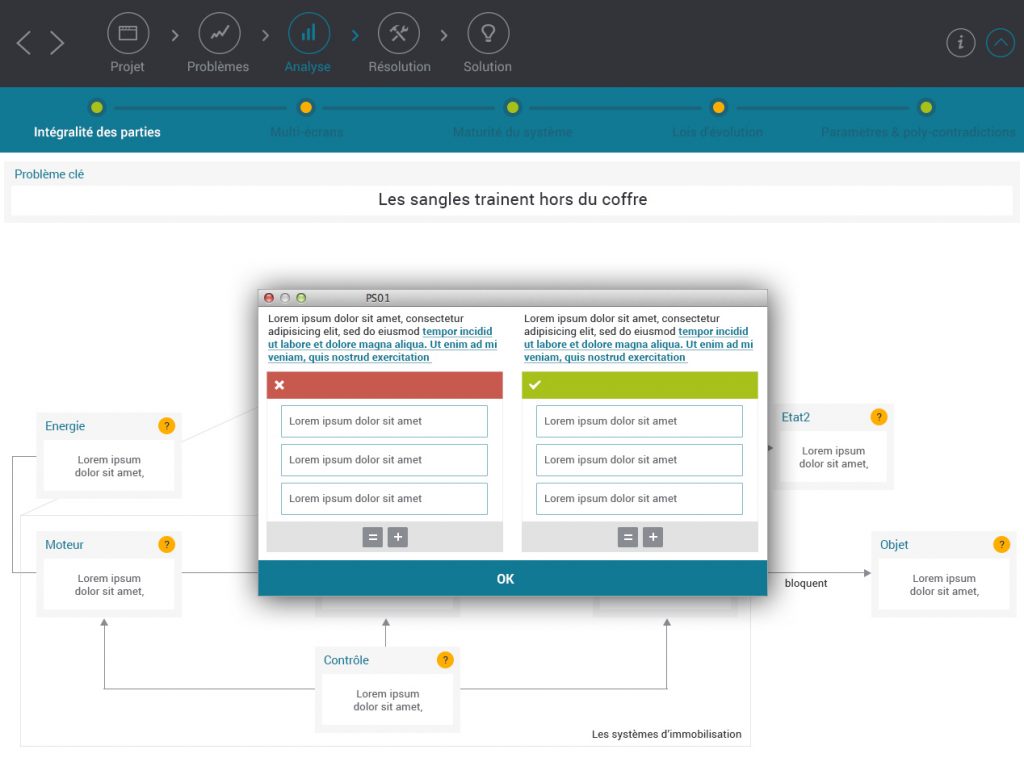
Based on this representation, STEPS helps the working group identify a key problem and then carry out the analysis using different approaches. This work notably brings to light the contradictions that shape the system and guides the search for solutions.
Needs analysis
The initial context
Despite its rich features, STEPS remained difficult to get to grips with. The analysis of the existing tool highlighted two main obstacles from the users’ point of view:
- an unintuitive interface that made learning and everyday use harder;
- a dated visual style that made the tool less engaging.
These difficulties limited its adoption. The first assignment therefore consisted of rethinking the usability and visual identity before moving on, in a second phase, to rewriting it for the web.
Stage 1
Redesigning the user interface
The first assignment focused on the user experience and visual identity of STEPS. We worked on three complementary areas:
- rethinking the usability of certain views to make them easier to understand and use;
- creating a new, more modern and more readable visual identity;
- designing an iconography consistent with the various uses.
This work modernised the working environment while keeping the functional logic users already knew. It also prepared the project’s second stage, dedicated to completely rewriting STEPS for the web.
Stage 2
From Java software to a web-based solution
The second stage involved completely rewriting STEPS so it could be accessed from a browser. The challenge was to keep the functional richness of the Java version while offering a web architecture that was more flexible, easier to deploy and better suited to today’s uses.
This new version was custom-developed with Angular and Ruby on Rails, while preserving compatibility with the existing version to ease the transition for users.
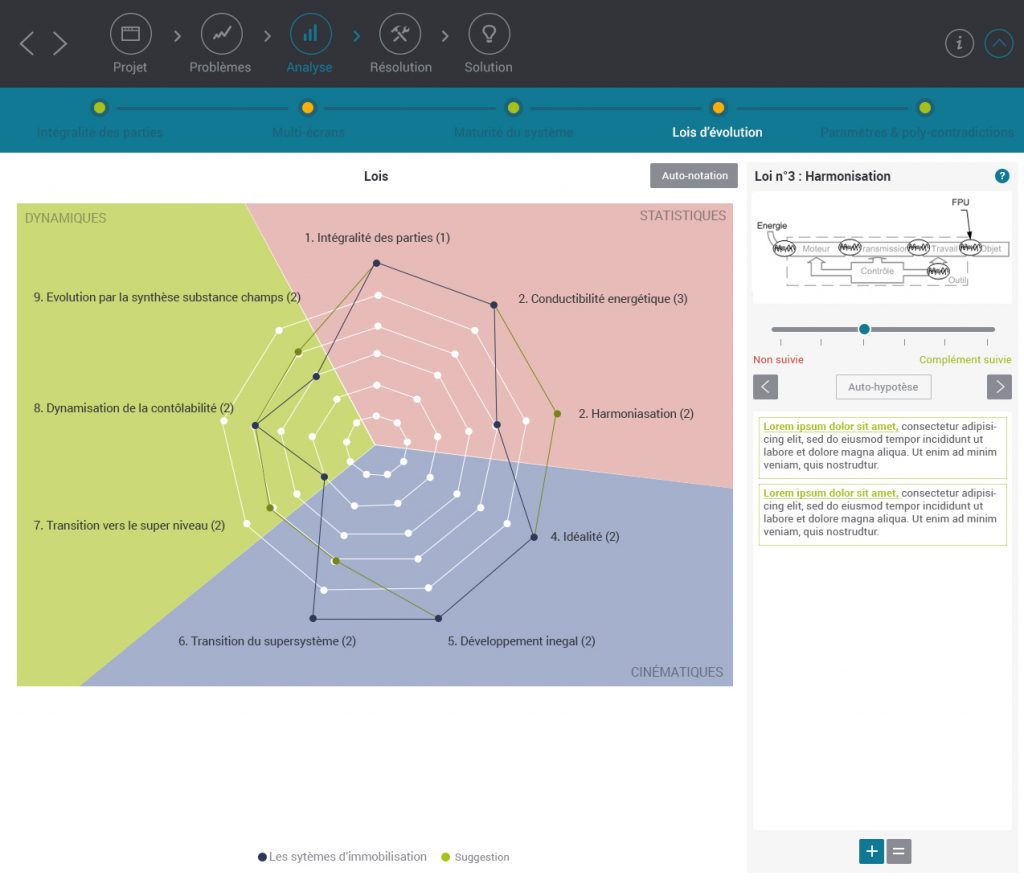
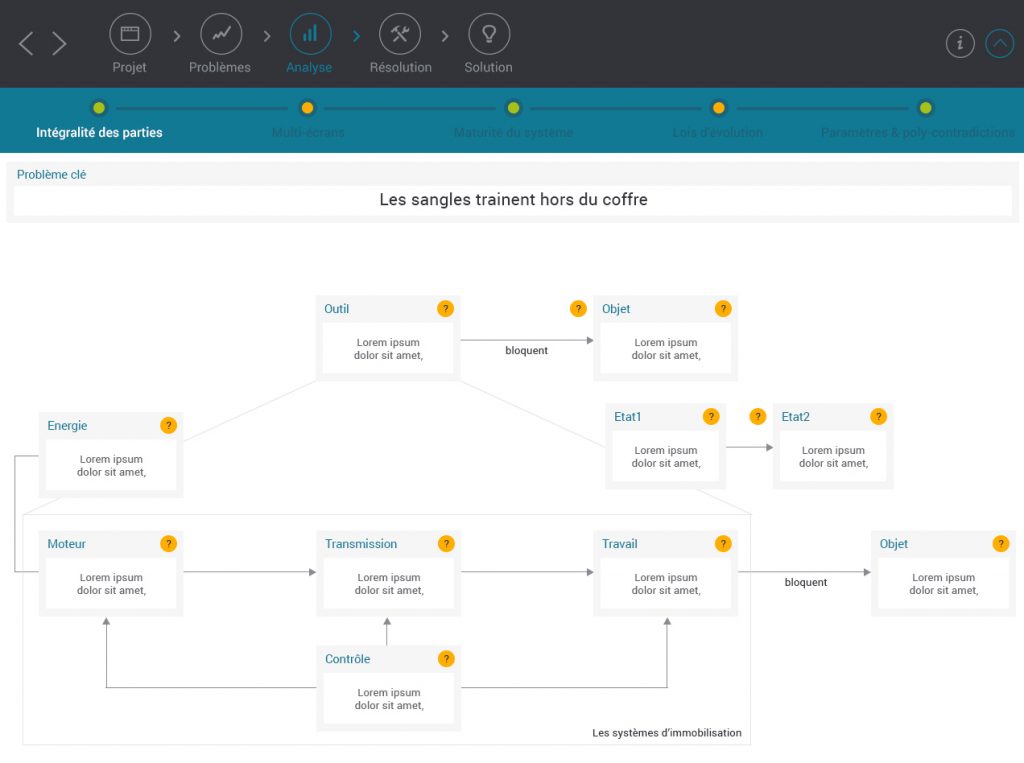
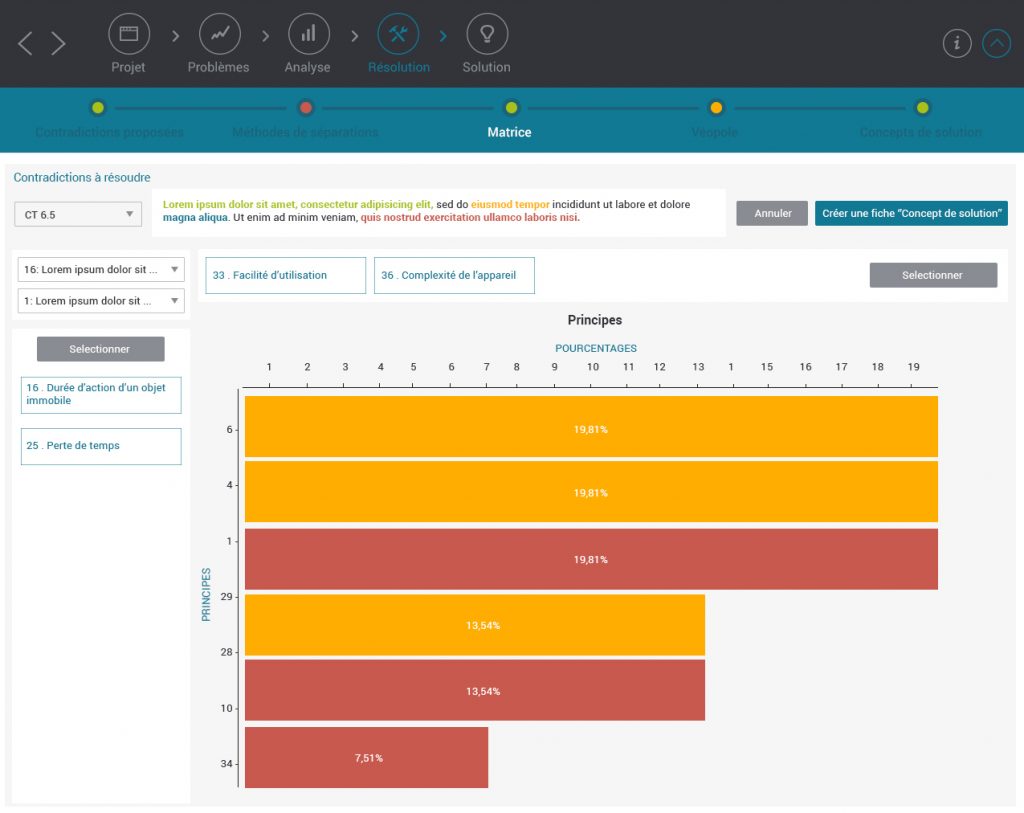
Example views of the application
Stage 3
An environment dedicated to distance learning
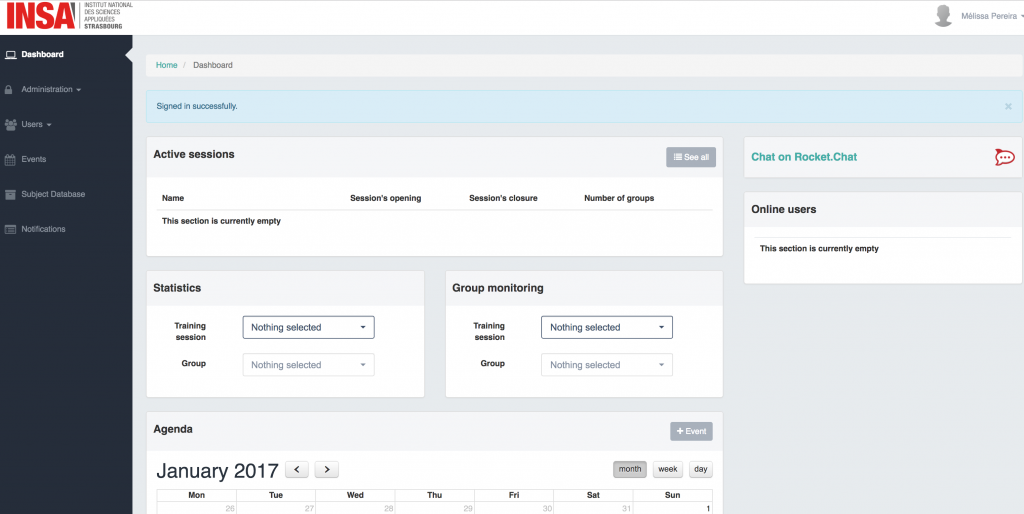
To support distance learning in innovation management, an e-learning space was developed alongside STEPS. It lets instructors form groups of students around a topic and organise their progress based on the analyses carried out in STEPS.
Students and trainers can thus discuss ongoing work and collaborate remotely. A bridge to Rocket.Chat was also set up to complement these exchanges.

A business application to create, take over or modernise?
Let’s discuss your context, constraints and uses to identify the most relevant path forward.