
Mobile app · React Native
React Native agency for your iOS and Android apps
Idéematic designs, develops and maintains React Native mobile apps for businesses: one codebase shared by iOS and Android, connected to your information system, and supported after go-live.
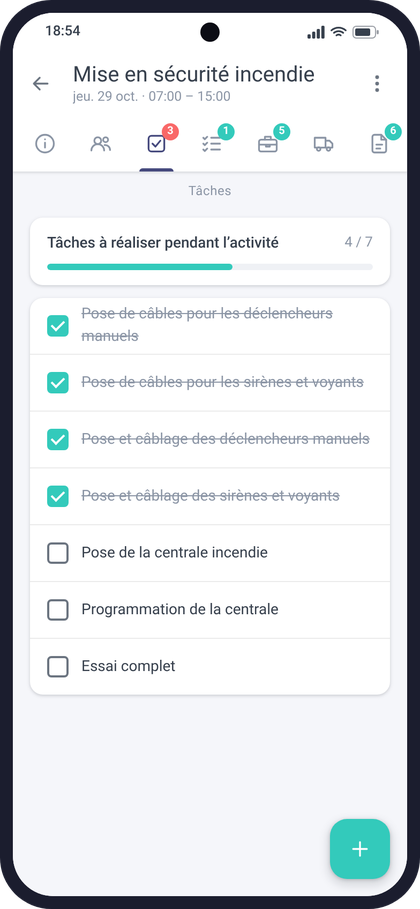
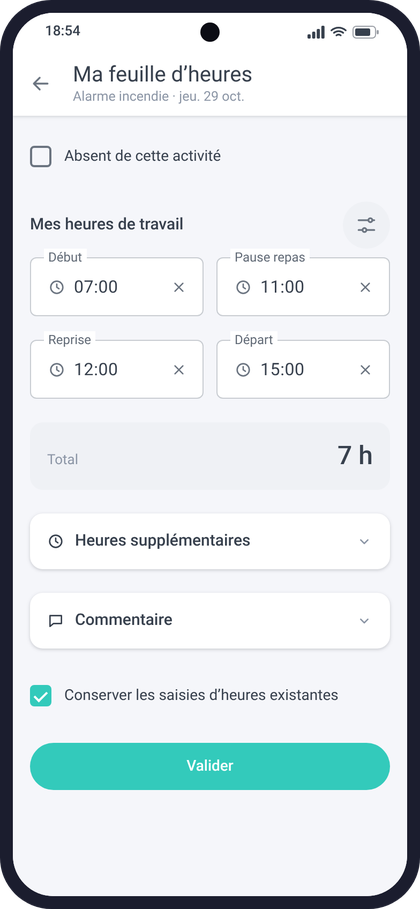
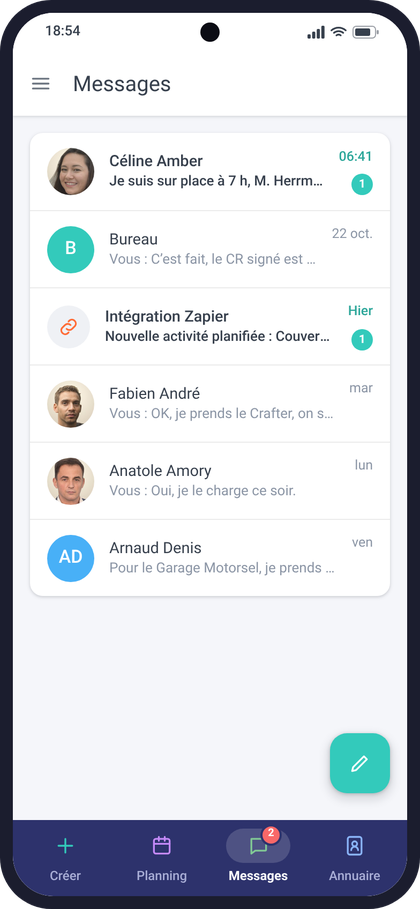
Definition
What is React Native?
React Native is an open-source framework created by Meta for developing mobile apps for iOS and Android from a shared codebase, in JavaScript or TypeScript. The app uses each system’s native components, giving it the behaviour expected of an app installed from the App Store or Google Play.
React Native uses the same library as React JS. As a React Native agency, we use this framework to speed up the development of bespoke mobile apps.
For a fuller overview, see the definition of React Native in our glossary.
Strengths
Why develop your app with React Native
React Native is often the right choice for a business app or customer service that needs to run on iOS and Android and communicate with your existing software.
One codebase for iOS and Android
Much of the code is shared between the two systems: less duplicated development, and enhancements delivered at the same time on both stores.
Skills shared with the web
React Native and React JS share their principles. On Techtime, the React Native mobile app and the React JS web client rely on the same APIs.
Phone features
Camera, geolocation, scanning, notifications, local storage: the app accesses the device features that are useful in the field.
Performance suited to business apps
Lists, forms, synchronisation, real time: React Native covers the needs of most business applications.
A mature ecosystem
A large community, proven libraries and tools such as Expo, recommended by the official React Native documentation.
An app that can be maintained
A single codebase to evolve, provided the framework and its dependencies are updated regularly.
Comparison
React Native or Flutter?
Both frameworks make it possible to develop an iOS and Android app from a shared codebase. We work with both: the choice depends on the uses, the expected interface, the integrations and the team that will maintain the app.
We detail the criteria and hidden costs of each option in our article React Native or Flutter for a business application (in French). A native app or a web application is sometimes preferable: see bespoke mobile app development.
| React Native | Flutter | |
|---|---|---|
| Language | JavaScript or TypeScript, with React. | Dart. |
| Interface | Each system’s native components. | Its own rendering engine, identical interface on each system. |
| Link with the web | Skills and principles shared with React JS. | Flutter can also produce a web version, with its own constraints. |
| Ecosystem | Very large, backed by Meta and the JavaScript community. | Large, backed by Google. |
| Well suited to | An app connected to a React web ecosystem, JavaScript teams. | A highly polished interface that is identical everywhere, rich animations. |
Case studies
React Native apps in production
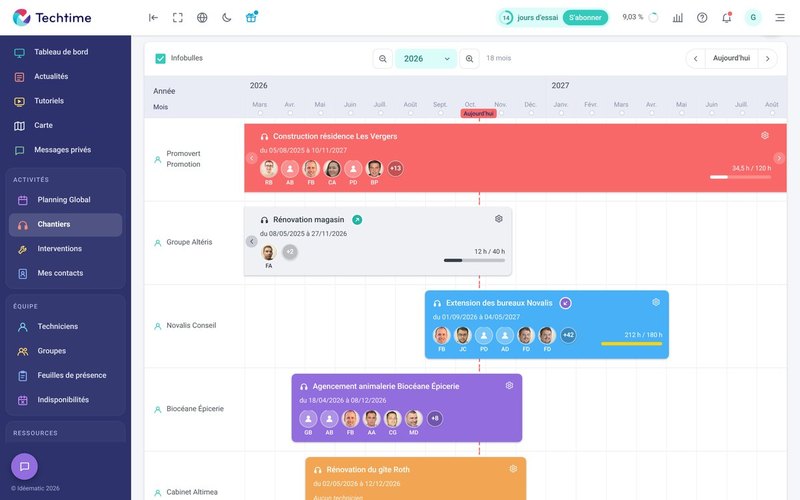

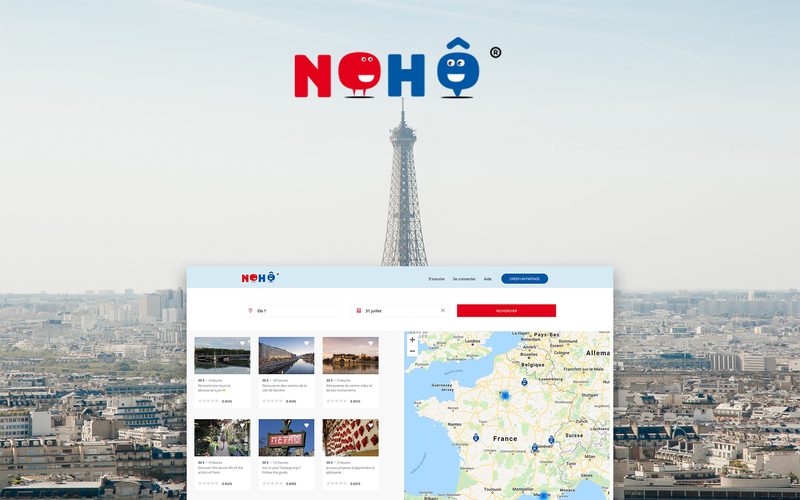
Architecture
A mobile app, and everything that makes it work
A React Native app is only part of the solution. It relies on a back end, APIs, notifications and exchanges with your information system, which we design and develop alongside it.
An API at the centre
On Techtime as on Tailorfin, a Ruby on Rails back end centralises the business rules and exposes the APIs used by the mobile app and the web client.
Notifications and real time
On Techtime, notifications go through Firebase and real time through ActionCable: schedule, messaging and reports stay in sync with the office.
Connected to your tools
The app exchanges data with your business software, your CRM, your ERP or third-party services, through APIs.
Takeover and maintenance
Taking over and evolving a React Native app
Does your app already exist, developed by a freelancer, another agency or in-house? We can take over technical responsibility for it.
A React Native audit first reviews the framework used, its version, compliance with best practices, the app’s structure, tests and performance. We then handle enhancements and React Native framework updates (in French), essential to keep up with iOS and Android versions, as part of application maintenance and support.
We make a good team!
Having started developing a React Native mobile app with a freelancer, admittedly an excellent one, I very quickly came up against the limits of that approach in terms of capacity.
So I contacted Idéematic to hand over technical responsibility for my business. Unlike a freelancer, Idéematic has a team: this gives me better responsiveness and a wider range of skills. We also talk a lot and decide together on the most effective approaches, both for development and for user experience. It is teamwork.
Idéematic now develops my mobile apps and their associated websites. Looking back, I think I would have saved time and money by starting directly with Idéematic.
Approach
Our approach for your React Native app
- 1
Scope
Users, priority uses, data and integrations: the scope and schedule of the first version.
- 2
Design
Journeys, key screens and architecture, with exchanges with your APIs and software planned from this phase.
- 3
Develop and test
Interim deliveries, tested on the relevant iOS and Android devices.
- 4
Publish and maintain
Publication on the App Store and Google Play, or private distribution, then corrective and evolutive maintenance.
Frequently asked questions
React Native or Flutter: which should you choose?
Both make it possible to develop an iOS and Android app from a shared codebase. React Native often wins when the app is linked to a React web ecosystem or JavaScript teams; Flutter, when the interface must be pixel-identical on each system. The choice is made during scoping, based on uses and maintenance.
Is React Native suitable for a business app?
Yes. Forms, lists, synchronisation, notifications, access to the camera or geolocation: React Native covers the needs of most business applications. Techtime, used by construction technicians in the field, is one example.
Can code be shared between the mobile app and the web application?
Partly. React Native and React JS share the same principles, and both the mobile app and the web client rely on the same APIs and the same server-side business rules. The interface remains tailored to each medium.
Can you take over an existing React Native app?
Yes. We start with a code audit (framework version, best practices, structure, tests, performance), then take over technical responsibility for the app, its enhancements and its maintenance.
Do you handle publication on the App Store and Google Play?
Yes. We prepare app releases taking into account the constraints of each store and the iOS and Android versions. A business app reserved for employees can also be distributed privately.
Why should React Native be updated regularly?
To stay compatible with new versions of iOS and Android and with store requirements, benefit from security patches and avoid technical debt that is costly to catch up on. These updates are part of the app’s maintenance.
A React Native app project?
Tell us about your uses, your users and your tools: together we will work out the right app and technology.