
Réalisation · Online shop
Pillivuyt, a bespoke e-commerce site
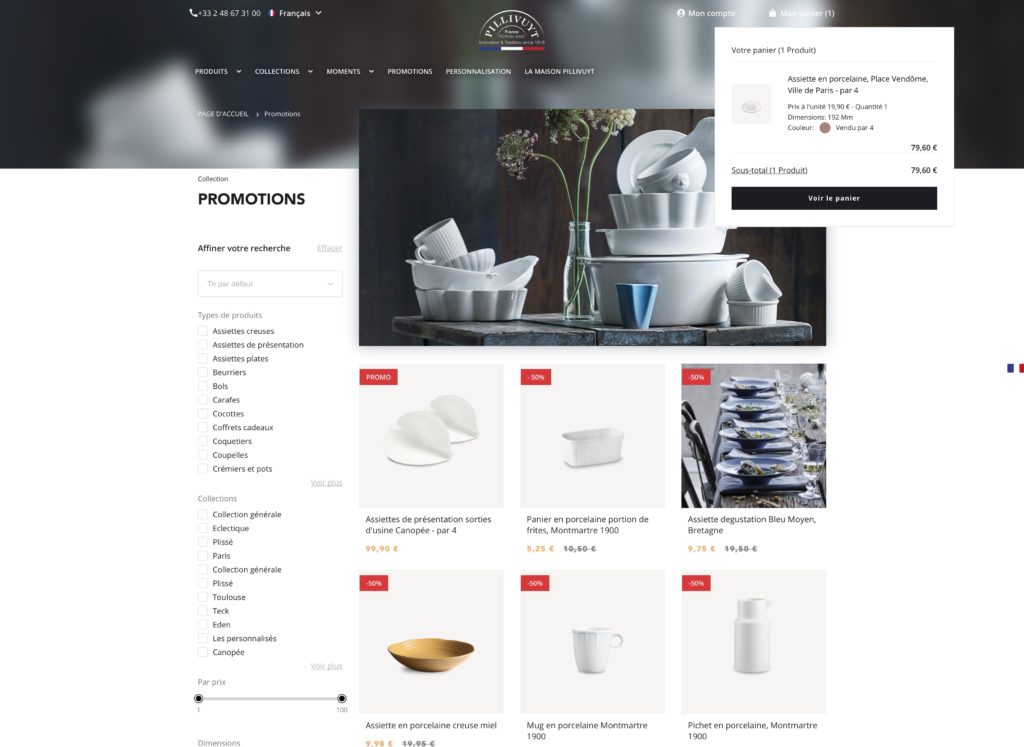
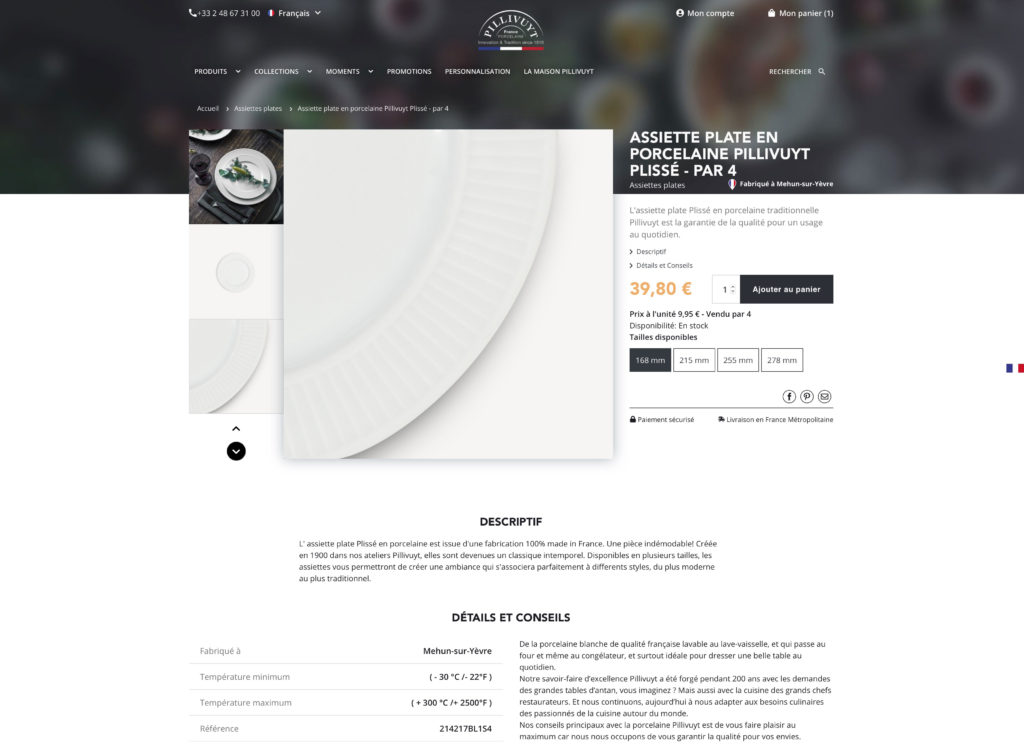
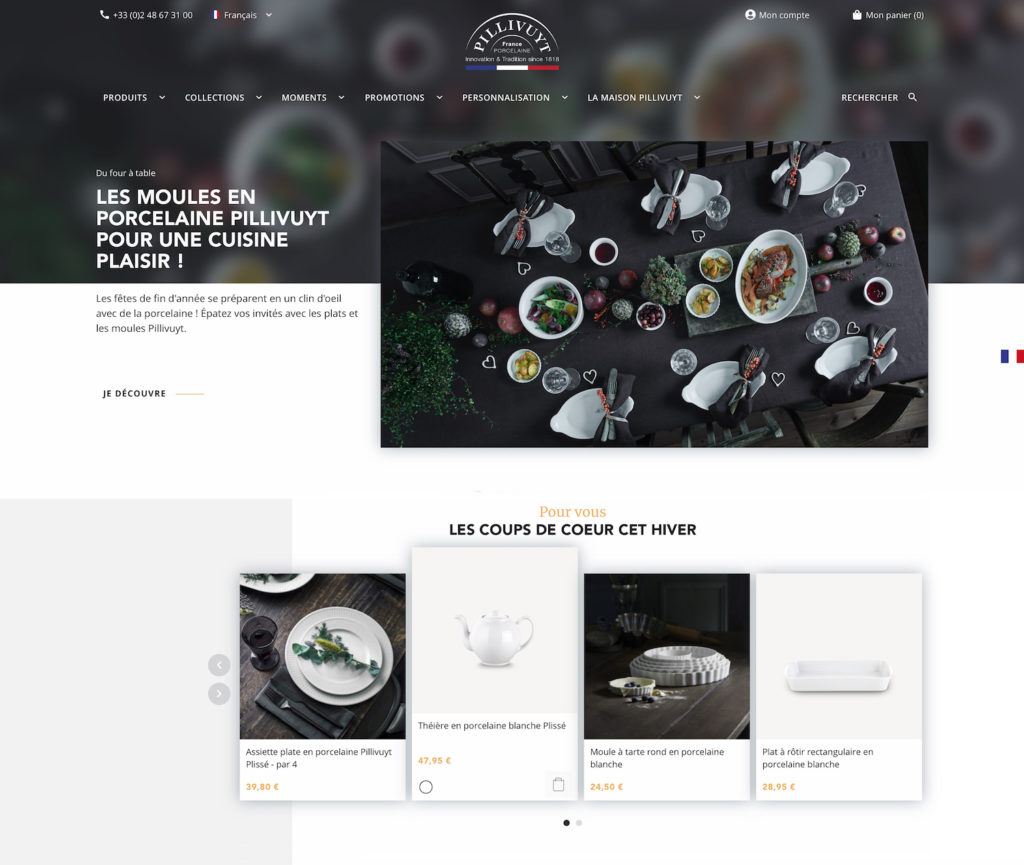
Pillivuyt, a French porcelain manufacturer with more than 200 years of expertise, entrusted Idéematic with the design and development of its e-commerce site. Our work covered project scoping, defining needs and features, and then building a bespoke platform designed to support the brand’s online sales.
In brief
Pillivuyt
- Business
- Business: porcelain manufacturer
- Our involvement
- Online shop, Scoping & design
- Website
- shop.pillivuyt.fr
A french porcelain manufacturer
Historic craftsmanship, still rooted in France
Founded by Jean Louis Richard Pillivuyt, the manufacturer is one of the oldest French porcelain brands. Its production is still carried out in France and relies on historic craftsmanship, now combined with modernised manufacturing processes.
Pillivuyt is notably one of the few manufacturers to produce its own clay body, using an in-house recipe and carefully selected raw materials. This mastery of production contributes to the quality and identity of its collections.
The context
A digital ecosystem that had become strategic
Before the project entrusted to Idéematic, Pillivuyt already had several online sales and communication channels. The brand had first opened an e-commerce site reserved for trade customers, then a consumer showcase site in 2018, complemented by a shop for French-speaking consumers. In 2019, its international development continued with three partner e-commerce sites in Denmark, South Korea and the United States.
This ecosystem served different audiences and uses, but had gradually become more complex. The showcase site had become the brand’s international portal and, in 2020, its main source of traffic to the online shop. Its steadily falling traffic and technical obsolescence then highlighted the need to rethink the whole set-up and better connect brand presentation, access to content and online sales.
Objectives
Accelerating direct sales to consumers
In March 2020, the closure of restaurants severely affected Pillivuyt’s main market, historically focused on food service professionals. This context accelerated a shift that was already strategic for the manufacturer: diversifying its customer base and further developing direct sales to consumers.
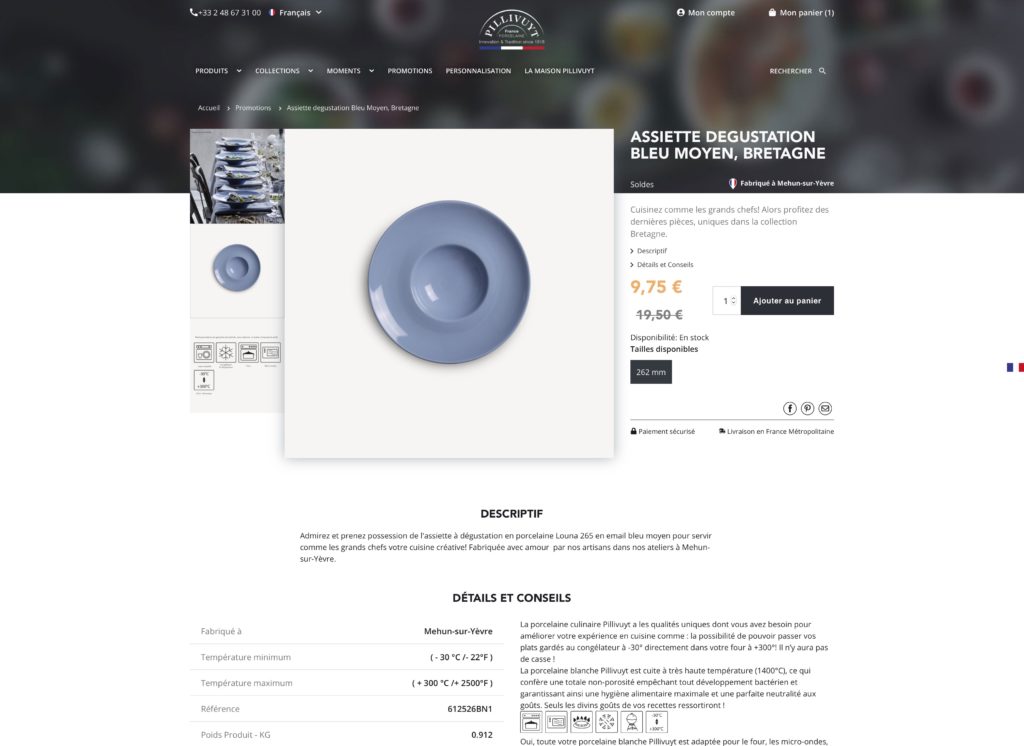
The e-commerce site had to become a bigger driver of this diversification. Its redesign had to make online buying easier, support sales growth among the general public and better connect the brand’s world with its online commercial activity.
The challenges
Bringing together brand image, shopping experience and e-commerce performance
The project was not just about modernising an online shop. Pillivuyt wanted to better combine its brand world and its e-commerce activity, while meeting consumers’ expectations and making the set-up easier for its teams to manage.
Several challenges had to be taken into account:
- improving the user experience, navigation and access to products;
- increasing the site’s visibility in search engines and encouraging conversion;
- defining technical choices suited to the convergence of brand content and e-commerce functions;
- planning an organisation enabling more efficient handling of requests internally;
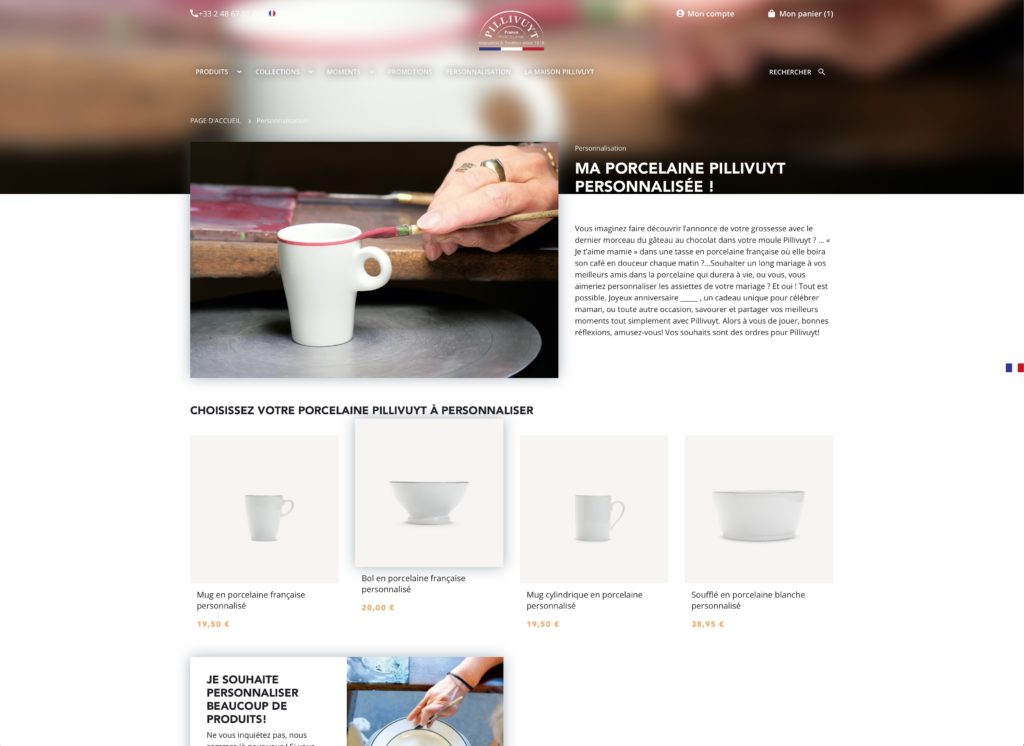
- integrating a personalisation tool and preparing the development of specific services;
- highlighting Pillivuyt’s human, ethical and environmental commitments to differentiate its offer from the major e-commerce platforms.
In the longer term, the ambition was to bring the showcase site and the shop together into a single platform. It had to support consumer sales in France, strengthen Pillivuyt’s international presence and better showcase its positioning as a manufacturer renowned for the quality of its porcelain and its craftsmanship. The project also had to enable the development of exclusive services, including personalisation, Kintsugi and private tours.
The redesign project
Structuring the project before development
Before starting development, we carried out a definition and design phase with Pillivuyt’s teams to turn the project’s objectives into precise requirements. This work enabled us to understand the brand’s environment, its commercial challenges, its various users and the expected uses of the future e-commerce site.
The functional and technical scoping notably covered:
- business objectives and the expectations associated with the project;
- the various user roles and their needs;
- the site’s structure and navigation principles;
- the main use cases and expected features;
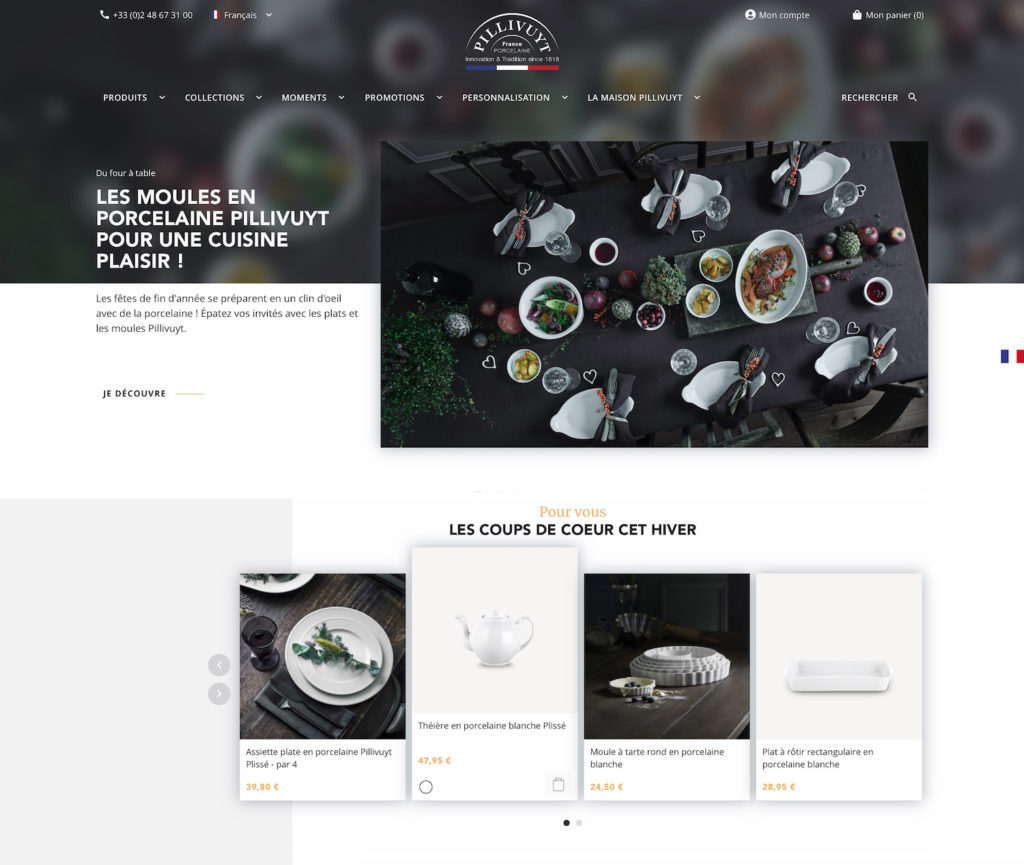
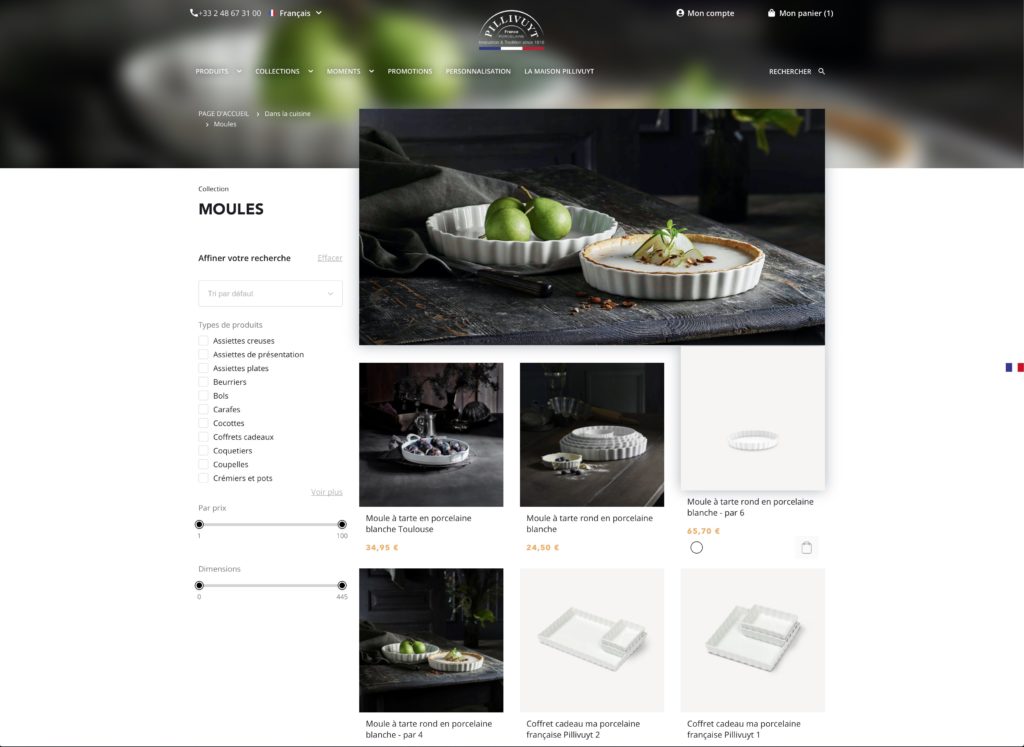
- wireframe design to bring the interfaces and journeys to life;
- graphic direction, notably through visual concepts and a mood board;
- the definition and sizing of deliverables;
- the functional testing strategy;
- the technology choices to consider;
- identifying the risks, uncertainties and constraints likely to affect the project.
This phase formalised the e-commerce site’s specifications and produced the wireframes before development began. Development could thus rely on a clear functional scope, documented design choices and a shared vision of the product to be built.
E-commerce site development
Bringing the platform to life through to go-live
Once the functional scope had been defined and the design choices formalised, we began building the e-commerce site. This second phase aimed to turn the specifications and wireframes into a fully operational platform.
The work covered the main stages needed to go live:
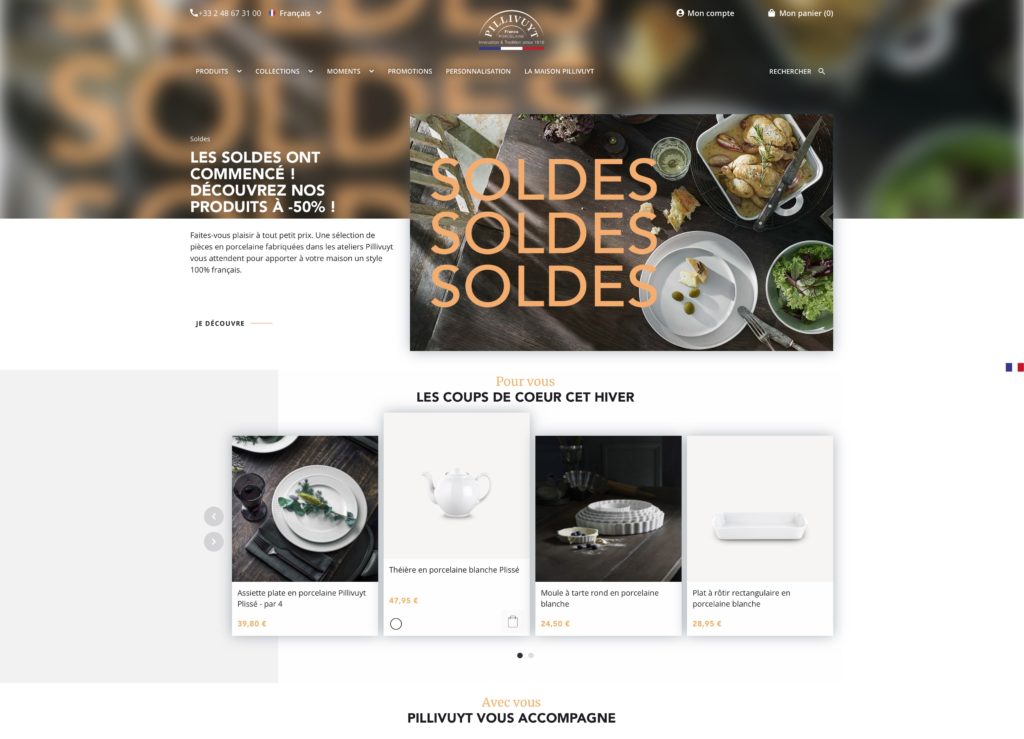
- creating graphic mock-ups or using UI/UX components suited to the project;
- front-end integration of the interfaces;
- development of the e-commerce platform and its features;
- functional testing and browser compatibility checks;
- content integration;
- preparing and launching the site.
Idéematic thus supported Pillivuyt from defining the need through to actually building its online shop. The project therefore combines scoping, design, development and go-live within a single approach.
Technologies
Combining custom development with an open-source foundation
To develop Pillivuyt’s platform, we combined Ruby on Rails with Spree Commerce. The former provided the application framework, while the latter provided an open-source foundation dedicated to online sales. This combination made it possible to rely on existing components while keeping the freedom to develop the specific features defined during scoping.
The aim was not to assemble a standard shop, but to adapt and extend this technical foundation to Pillivuyt’s needs. Custom developments thus complemented the existing functions to meet the scope defined upstream.

Do you have an e-commerce project to develop?
Idéematic supports complex e-commerce projects from scoping through to go-live. We define needs, design features, choose the right architecture and develop a platform able to meet your business’s uses, technical constraints and objectives.