
Idéematic
EN
Discuss your projectContact usContact

Business application · ERP

Bespoke ERP, designed around how you run your business

The core of your management, built to fit your organisation. Idéematic designs, develops and maintains bespoke ERP systems and management applications that complement your existing ERP, connected to your information system.

Bagelstein

3 central kitchens

A bespoke production extranet: orders from franchised restaurants, production, delivery and invoicing.

See the case study

Assimil

Connected to Sage

The online shop communicates with the database shared by Sage, which manages products and stock, and Assilog.

See the case study

Definition

What is a bespoke ERP?

A bespoke ERP is integrated management software developed for a specific company. Its modules, data, rules and integrations are designed around its processes, instead of adapting the organisation to a standard software package. It can replace an off-the-shelf ERP or complement it for the core business.

An ERP (Enterprise Resource Planning) system is software made up of different modules that centralise and automate most of a company’s business processes (procurement, production, accounting, human resources, customer relations, etc.).

When built to measure, only the useful features are developed, and the tool can evolve as your needs change. It is a form of bespoke business application that covers your entire management.

Comparison

Off-the-shelf ERP or bespoke ERP?

An off-the-shelf ERP remains suited to standardised functions such as accounting. Bespoke becomes relevant when your processes, business rules or integrations cannot fit into a software package without distorting it.

The answer is often a mix: keep the off-the-shelf ERP for what it does well, and develop a bespoke management application for the core of the business, connected to it. This is what ERP, CRM and API integration makes possible.

Comparison between an off-the-shelf ERP and a bespoke ERP
Off-the-shelf ERPCustom ERP
FeaturesA large catalogue of standard modules, to be configured.Only the useful features, built on your processes.
ProcessesStandardised processes that the organisation adapts to.Business rules, approvals and special cases specific to your business.
IT integrationDepending on the connectors offered by the vendor.Exchanges with your applications, data and services planned from the design stage.
EvolutionAccording to the vendor’s roadmap.According to your needs, in successive releases.
CostLicences or subscriptions, configuration and integration.Scoping and development, then maintenance and support.
Code and dataThe vendor’s software.Ownership of the code and control of the data.

Modules

The modules of a bespoke ERP

A bespoke ERP includes only the modules you need, and links them together around a single database.

Purchasing and procurement

Supplier orders, tracking of purchases and deliveries received.

Stock and logistics

Stock levels, movements, picking and shipping.

Production and planning

Production orders, bills of materials, resource planning, orders between sites.

Production management

Sales and invoicing

Quotes, customer orders, services and invoicing.

Customer relations

Contacts, opportunities, history and sales follow-up.

Bespoke CRM

Teams and interventions

Team scheduling, sites and interventions, timesheets, documents.

Further reading (in French): the 7 main components of ERP software.

Integration

An ERP connected to your information system

A bespoke ERP does not necessarily replace all your tools. It exchanges data with your accounting, your CRM, your DMS, your online shop or your partners’ services, to avoid double entry and make data more reliable.

With an off-the-shelf ERP

For Assimil, the online shop was designed to communicate with the database shared by Sage, which manages products and stock, and Assilog, which centralises product information.

With the group’s CRM and DMS

MyInvest communicates in particular with Groupe Vivialys’ Microsoft Dynamics CRM and Easyfolder DMS, through web services and APIs.

With the company’s tools

KS Groupe’s bespoke CRM relies on the group’s Microsoft 365 for authentication, a SIRET lookup API and an address search service.

ERP, CRM and API integration

Approach

Our approach to building your ERP

  1. 1

    Map your processes

    Workshops with the teams: flows, business rules, profiles, rights, existing tools and data to migrate.

  2. 2

    Scope a first release

    The priority modules, their integrations and wireframes of the key screens, to estimate the development.

  3. 3

    Develop in batches

    Modules are delivered progressively, presented, tested and adjusted during the project.

  4. 4

    Migrate the data and deploy

    Migration of existing data, go-live and user support.

After go-live, application maintenance and support covers fixes, enhancements and technical monitoring of your ERP, with a 4-hour guaranteed intervention time on priority incidents where the contract provides for it.

Case studies

Management software in production

See our case studies
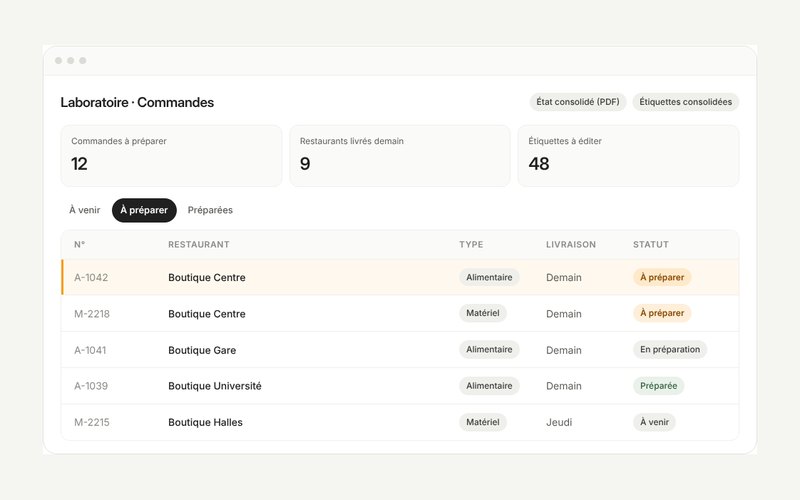
Illustration: the kitchen area of the Bagelstein production extranet

Production extranet · Ruby on Rails

Bagelstein: from restaurant orders to delivery

Before we stepped in, the company used Excel. Every day, the franchisees of the well-known chain sent an email with a spreadsheet of their order attached. The orders were then passed on to the central kitchens responsible for food preparation.

Since then, each franchise can log in to a web application to place its orders, which are automatically passed to the central kitchens, which can also manage the invoicing.

Each central kitchen manages its own product catalogue. For each order, it accesses the order form, the delivery note and the invoice; the administrator manages the shops, the central kitchens, their dependencies and all financial aspects.

See the Bagelstein case study
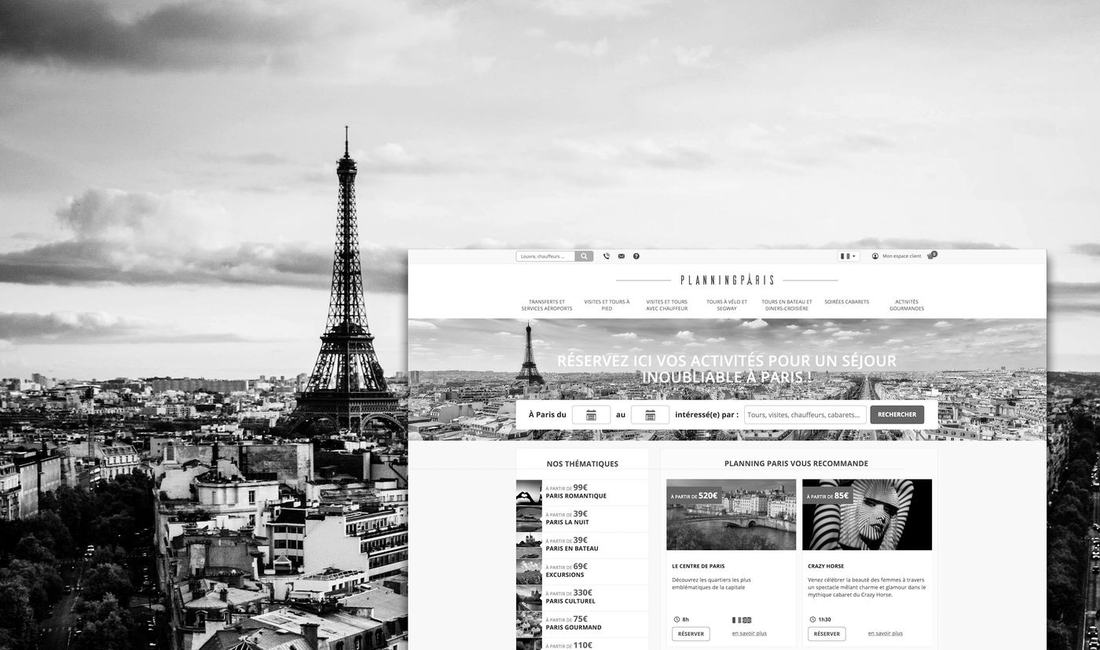
Planning Paris booking platform

Management application · Bespoke

Planning Paris: a management application to run the business

Alongside the booking platform, we designed a management application dedicated to the Planning Paris teams. This tool centralises administration and business management.

The administration tool goes well beyond simple content management. It centralises orders, the organisation of services and invoicing.

See the Planning Paris case study
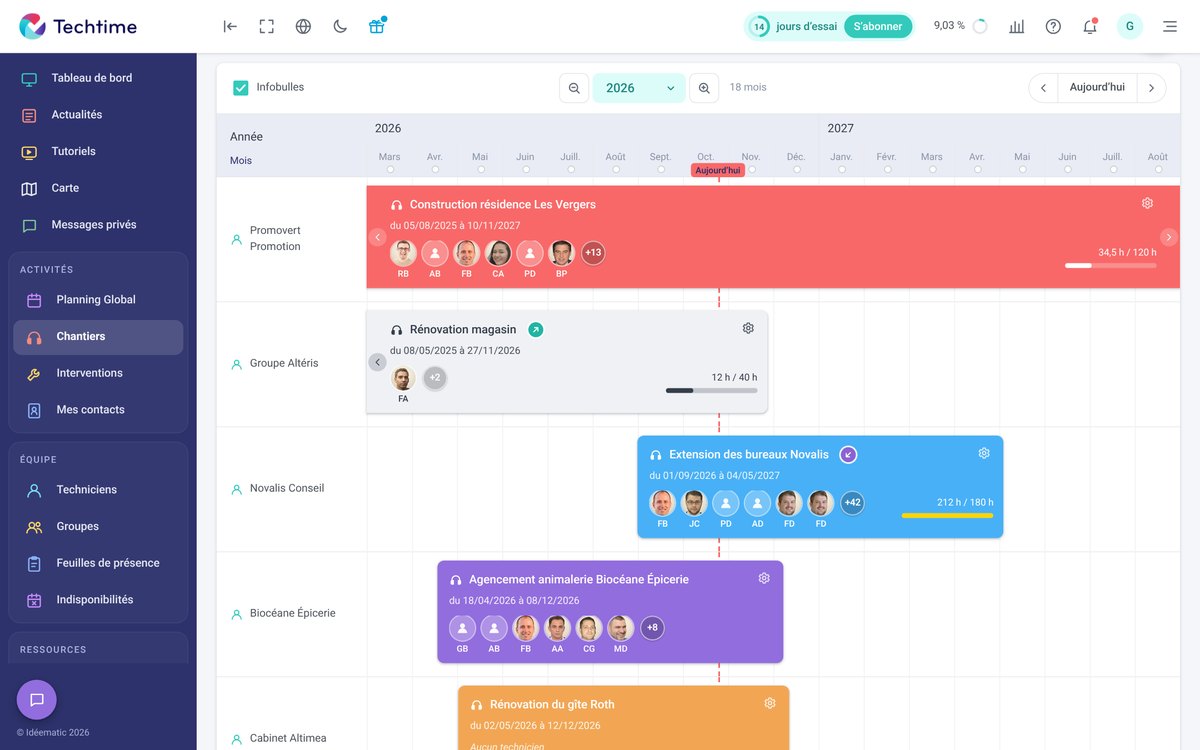
Planning of construction sites and interventions in the Techtime application

Business software · Web and mobile

Techtime: planning and tracking sites, teams and interventions

Techtime was designed to bring together in one piece of software the main planning, tracking and communication needs of construction companies.

Sites and interventions are organised as activities and tasks, to which teams, information, equipment, vehicles or documents can be attached.

See the Techtime case study

Frequently asked questions

Bespoke ERP or off-the-shelf ERP: how to choose?

An off-the-shelf ERP suits standardised functions and is rolled out through configuration. A bespoke ERP becomes relevant when your processes, business rules or integrations cannot fit into a software package without distorting it. The two are often combined: the off-the-shelf ERP for accounting, a bespoke application for the core business.

Can we keep our current ERP and build around it?

Yes. A bespoke management application can complement your ERP and exchange data with it, like Assimil’s online shop, designed to communicate with the Sage database. See ERP, CRM and API integration.

Can we migrate the data from our current tools?

Yes. Existing data is mapped from the scoping stage, then migrated and checked before go-live: mapping between old and new models, data integrity, how the interfaces work.

Can a bespoke ERP be used on mobile?

Yes, when the use requires it. Techtime, for example, combines a web platform for managers with a mobile app for technicians in the field.

How long does it take to develop a bespoke ERP?

From a few weeks to a few months depending on the project. Scoping sets the schedule, and modules can be delivered in successive releases.

How much does a bespoke ERP cost?

The cost depends on the number of modules, the complexity of the business rules, integrations with the information system, the volume of data to migrate and the level of maintenance chosen. We estimate it after scoping the first release.

Does your management not fit into a standard ERP?

Tell us about your processes, your tools and your data: together we will work out the right ERP or management application.

Let’s talk about your ERPGet in touch