
Réalisation · Business application
Bagelstein: production extranet
The Bagelstein extranet is a business application designed specifically for a food franchise network. From shop order to invoice, via the production kitchen, it manages the entire supply chain, with traceability down to each container.
In brief
Bagelstein
Idéematic designed, developed and evolved the application, from scoping with the founders to evolutive maintenance.
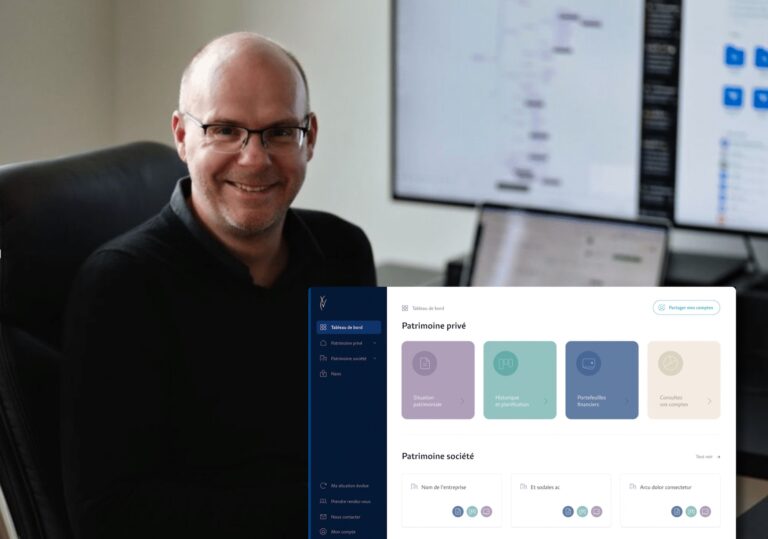
The real screens contain confidential data: the views shown on this page are reconstructed wireframes with fictitious data.
- Business
- Production and supply extranet for a food franchise network
- Our involvement
- Business application, Scoping & design, Web application
The context
Orders sent every evening in an Excel spreadsheet
Bagelstein is a fast-food chain that grows through franchising and offers ultra-fresh products. Everything sold in its shops is made overnight in the chain’s production kitchens and delivered first thing in the morning.
When the project started, shops sent their order every evening by email in an Excel spreadsheet, which was then passed on to the production kitchens. With a growing network, a tool was needed to centralise these exchanges, process them without errors and monitor activity.
Following workshops with the founders, Idéematic designed a bespoke business application linking head office, production kitchens and shops, both company-owned and franchised. It covers the entire supply chain:
- shop ordering
- production and traceability in the kitchen
- picking and dispatch by barcode scanning
- invoicing, then supplier purchasing and stock
Each profile has its own space and sees only its own data: a shop sees its orders, a kitchen sees the orders that concern it.
Ordering
Shops that order before the cut-off time
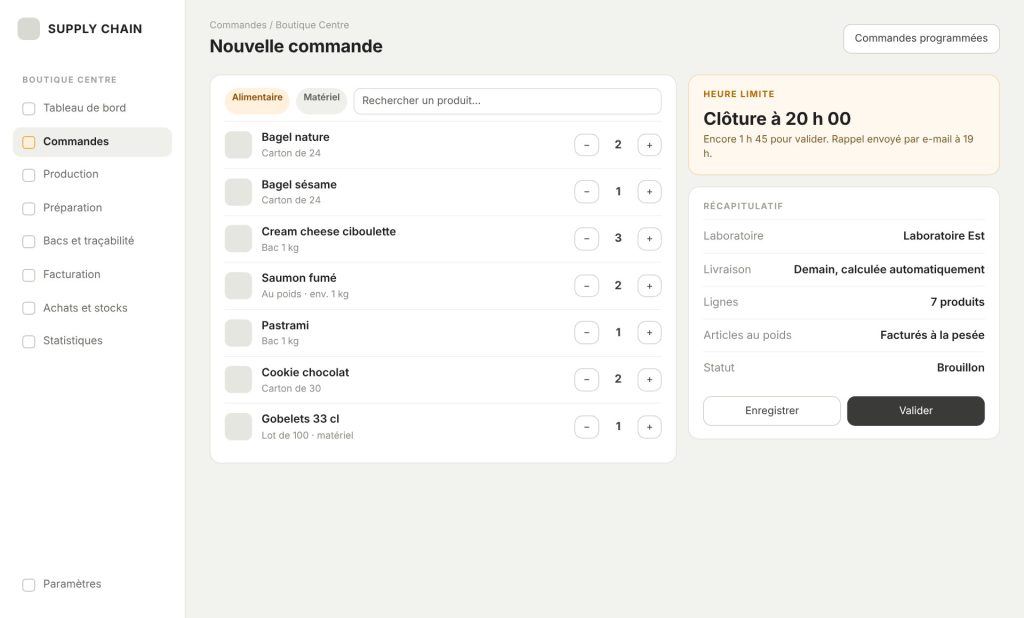
Each shop orders from the catalogue, food or equipment, or by quick search. Its order can remain a draft and be edited until it is confirmed; the delivery date is calculated according to the kitchen and the calendar.
Email reminders are sent before the cut-off time, unconfirmed orders are flagged, and everything is then frozen in the evening to start production. Orders from the same shop delivered on the same day are merged, and scheduled orders are placed automatically, day by day, for authorised shops.
Production
The kitchen knows what it has to produce
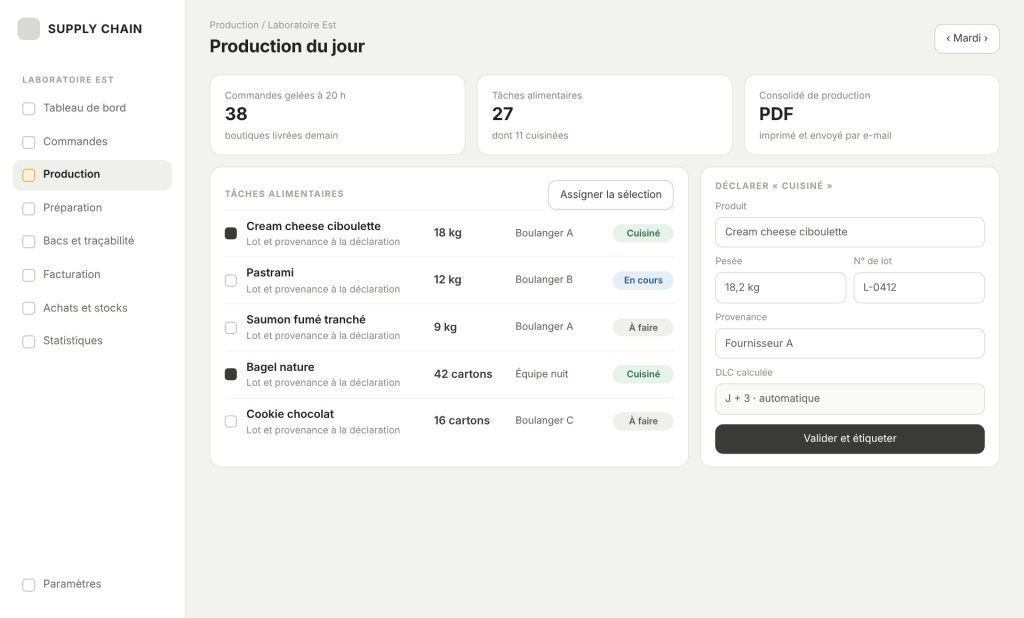
When orders close, the kitchen receives a consolidated report of everything it has to produce for the next day, printed automatically and sent by email.
Food tasks are assigned to the bakers, individually or by group. Each baker records their prepared product with its weight, batch number and origin, and the use-by date is calculated from the production date and the product’s shelf life.
Traceability
Traceability down to each container
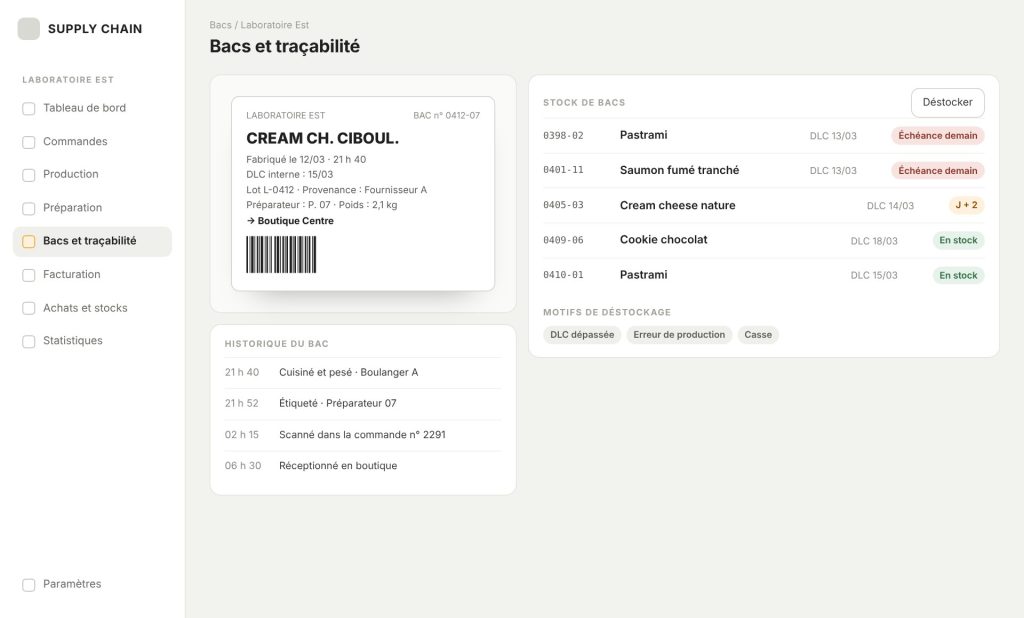
Each container receives a barcode label: kitchen, product, production date and time, internal use-by date, preparer, destination shop, origin and weight. Products prepared in advance can be labelled before being assigned to an order.
The container stock flags those nearing expiry, and every stock removal records its reason. The history answers at any time the question: who did what, and when.
Picking
Orders picked by scanning, without errors
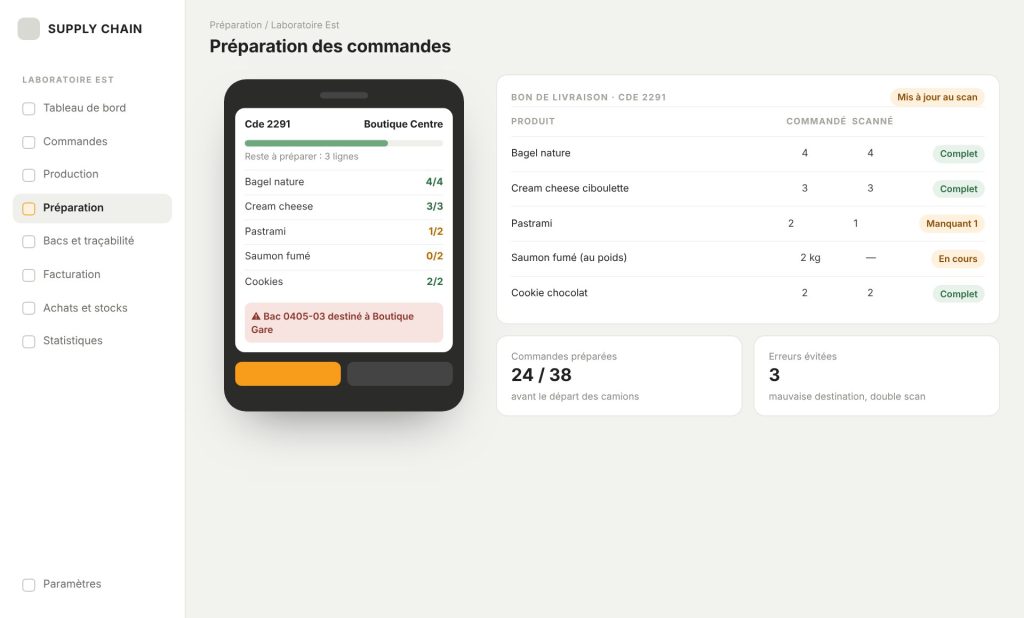
The picker selects an order and scans the container labels on a handheld scanner. The screen shows what remains to be picked, product by product; the system indicates whether the order is complete, flags missing items and updates the delivery note.
A wrong destination or a double scan triggers an alert, and the error log is emailed every day. The delivery note and any discrepancies between order and delivery are sent automatically to the shop, which in turn receives the goods by scanning.
Invoicing
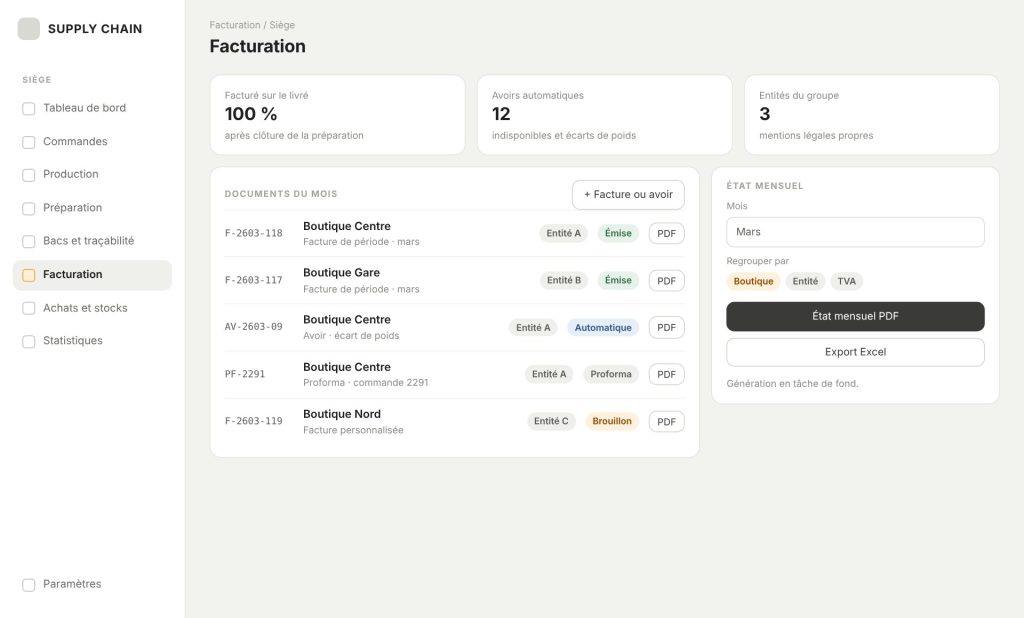
Invoicing what was delivered, without re-keying
The invoice is issued when picking is closed, based on what was actually delivered. Items sold by weight carry an indicative price when ordered and are invoiced on the actual weight.
The extranet handles several VAT rates and separates flows by group entity, each with its own legal notices. Pro forma invoices at ordering, period invoices per shop, custom invoices and credit notes, automatic for unavailable products or weight differences: everything is generated as PDF in the background, with a monthly report and Excel exports.
Purchasing and stock
A purchasing module added as the network grew
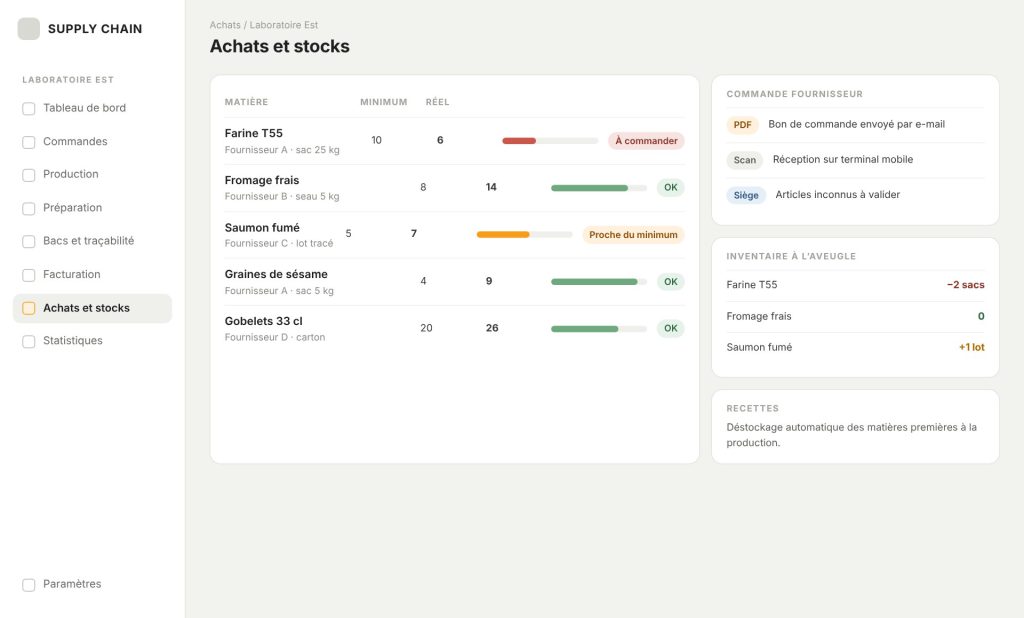
In 2014, the extranet gained a purchasing and stock module. Suppliers, goods and raw materials are managed with settings specific to each production site: minimum stock, actual stock, batches, use-by dates.
Supplier orders are sent as PDFs by email and received on a handheld terminal. Finished-product recipes automatically deduct raw materials from stock, stock counts are done on the terminal, including blind counts, and a report compares production cost with selling price.
Reporting
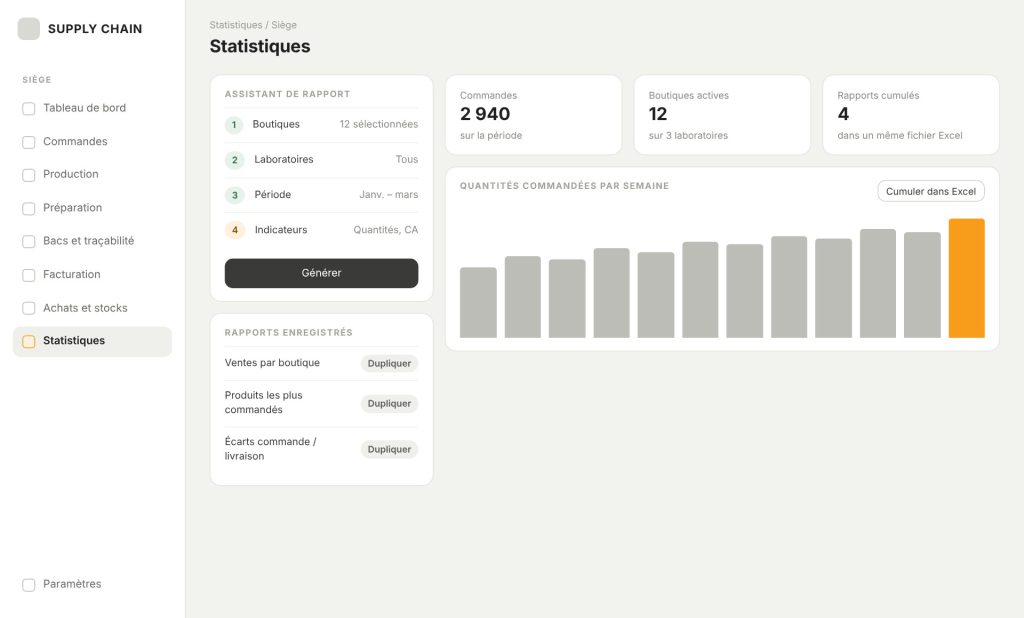
Reports built by head office
A wizard lets head office build its own reports: choice of shops, kitchens and periods. Reports can be duplicated and combined in a single Excel file, and orders can be exported site by site.
Our technical answer
A Ruby on Rails application built for the kitchen
The extranet had to work as well in the office as on the kitchens’ scanning terminals, produce reliable documents and absorb heavy processing every night.
- Ruby on Rails, with continuous integration and unit tests
- heavy processing in the background, such as invoice generation
- automatic document printing and barcode generation
- interface designed for handheld barcode scanners
- dedicated server, separate staging and production environments
Built to last
A tool that grows with the network
Live from November 2012, the first version was followed by version 2 in 2013, the purchasing and stock module in 2014, and then further developments until 2015: new kitchens, scheduled orders, intra-EU invoicing when a shop opened in Luxembourg.
These developments were carried out under corrective and evolutive maintenance, the approach we offer from scoping to application maintenance and support. The chain’s founder talks about the project in our Bagelstein client testimonial (in French).

Your orders, your production, your invoicing?
Tell us about your organisation and your flows: together, we will design the management software that connects your teams, from the shop floor to the invoice.