
Réalisation · Scoping & design
Alsace Wines
CIVA aimed to launch the new version of its consumer website, vinsalsace.com, in early 2014. In this context, it invited us to take part in its tender. Here is the whole story… and a very good story it is.
In brief
CIVA
- Business
- The Alsace Wine Interprofessional Council is the trade body for all AOC (Protected Designation of Origin) wines from Alsace.
- Our involvement
- Scoping & design
The client
The Alsace Wine Interprofessional Council (CIVA)
Bringing together more than 950 operators (independent wineries, cooperatives and merchants), CIVA’s mission is to provide services to the wine industry such as economic studies, the sharing of technical information and raising awareness of regulatory and reporting obligations. Its role is also, of course, to promote Alsace wines and vineyards in France and abroad through advertising, public relations, training and export support.
Objectives of the new site
Definition
The goal was to offer a site promoting Alsace wines, highlighting their connection with their terroirs through a modern aesthetic able to convey a sensory journey. The site’s development had to be fully flexible and scalable to adapt to future needs. The content management solution had to give the necessary autonomy to the users responsible for evolving the content.
Hence the importance, for this type of project, of answering the following four questions:
- What: which content to use, and what information do we want to convey?
- Who: who is the site for, and which visitor profiles should be targeted?
- When: how do content updates and distribution fit into a timeline?
- How: what means (software tools and people) will get us there?
Our response
To offer visitors optimal reading comfort, we focused our proposal on:
- the product experience: offering visitors a true immersion in Alsace wines and their culture
- identity exploration: revealing the visual identity and rolling it out on every page of the site as the ideal setting for the content
- accessibility: because everyone, whoever they are and whatever their equipment or location, should ideally be able to access a website’s content, digital accessibility has now become a standard
- responsive design: to adapt to different devices, the new site’s web design was conceived for their dimensions and built to respond to them dynamically
- interactions: a clear, dynamic presentation enhanced by elegant, smooth effects
Identity exploration
Colours and palette
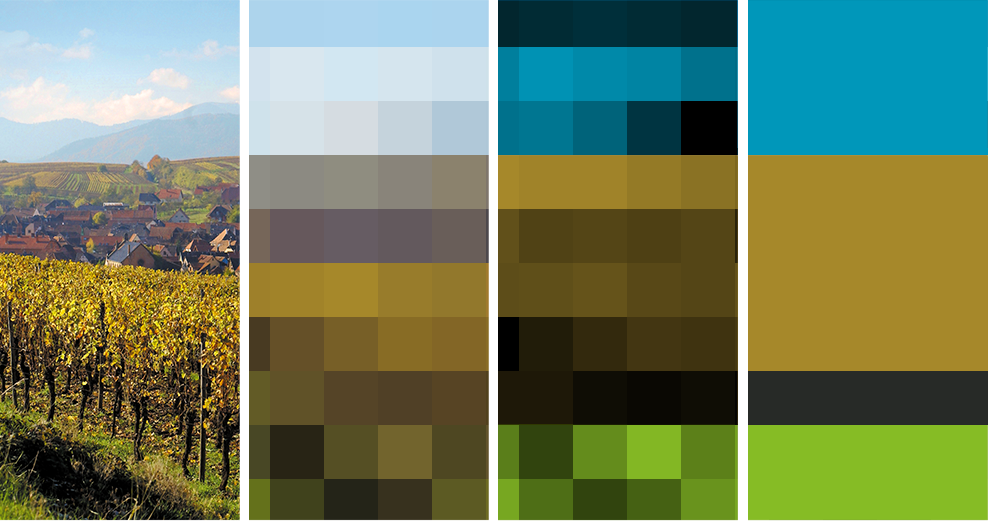
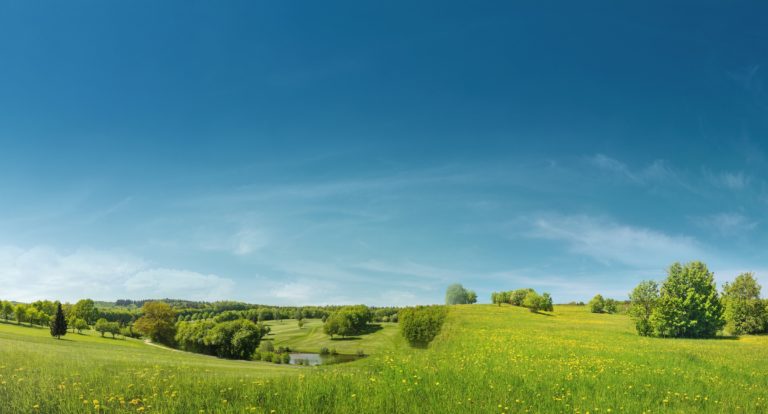
You have to visit Alsace to understand that its wine reflects what the region is. Rich and varied architecture, landscapes that blend the bright colours of the stubble fields with the dark green of the fir forests, its rounded mountains and gentle valleys. Alsace offers nature lovers superb landscapes.
And it was from a landscape that we started to create a colour palette evocative of Alsace. A palette strong enough to assert the unique character of Alsace wines. A palette starting from the sky and ending at the heart of the Alsace terroirs: its soil.
- Green is a colour that evokes nature, which is why it represents naturalness, balance, permission and freshness.
- Blue reminds us of nature and infinity, as it makes us think directly of the sea and the sky. Blue symbolises peace, calm, serenity and freshness, but also sensitivity.
- Yellow ochre evokes the warmth of the sun and richness. It is a soft colour that is easy to combine and goes perfectly with neutral tones.
- Although it is a muted colour, grey is very elegant.
In interior design, it has the particularity of suiting every setting and adding a modern touch.
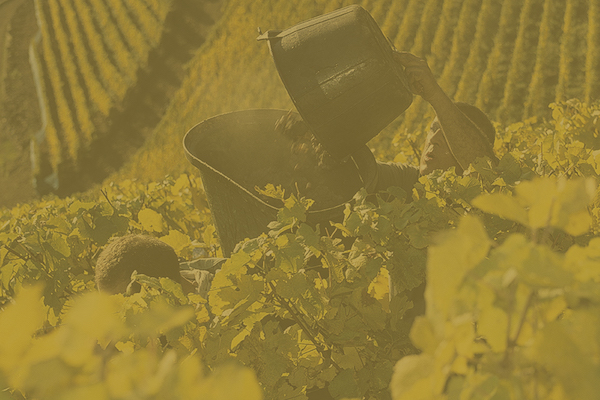
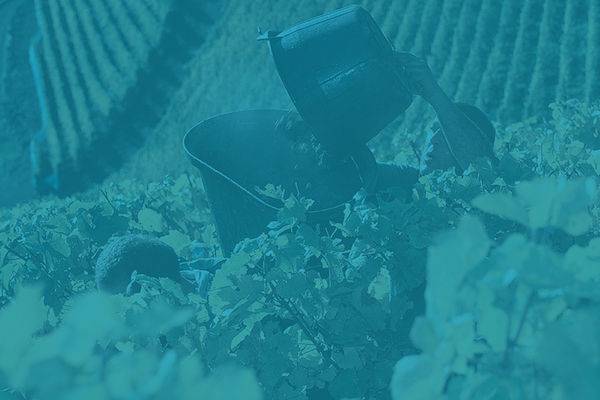
Image treatment
The user experience
The home page
The home page is the site’s shop window and often the first entry page. This is where visitors form their first impression. It is the most visited page, the one that determines whether a visitor goes further into the site. The home page plays a strategic role.
The home page’s intentions
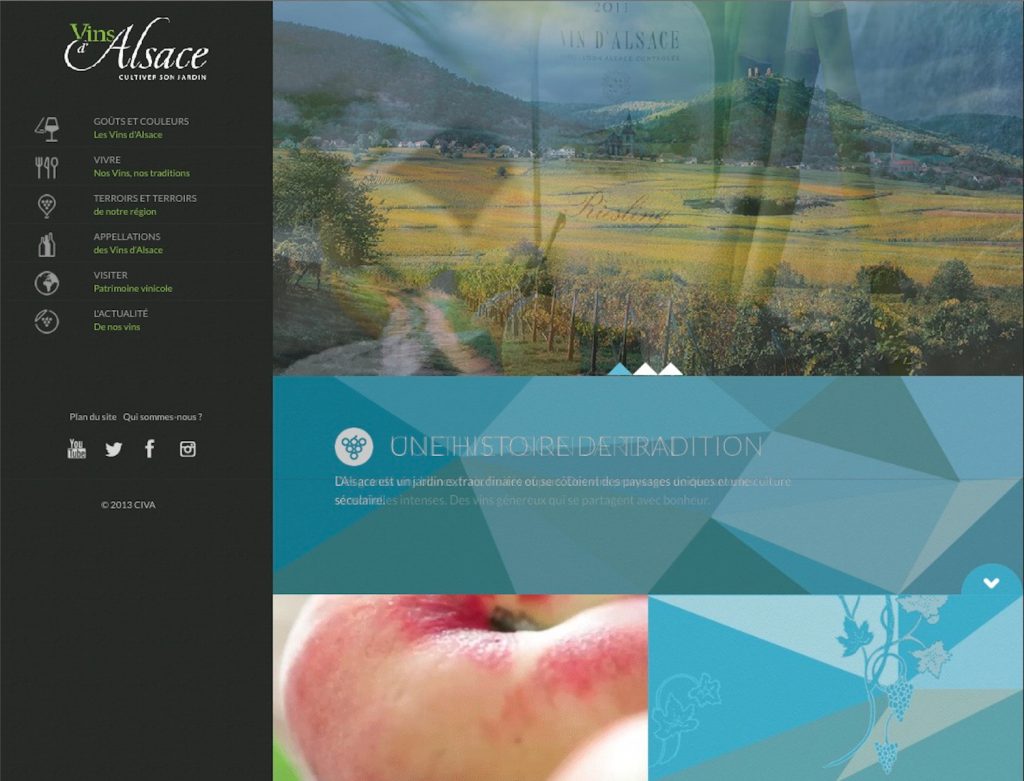
The idea was to offer visitors total immersion in the world of Alsace wines. The visual identity had to serve these intentions, as did the use of images in different formats, autoplay videos, featured information and featured section entry points.
The home page’s role is to explain to users how to navigate the site, but also to offer them the information you want them to see.
Zoning
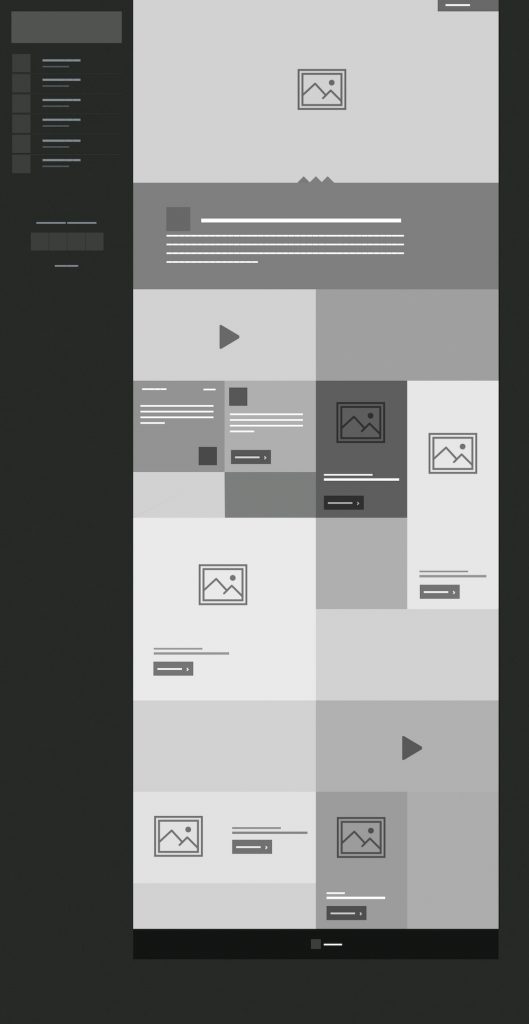
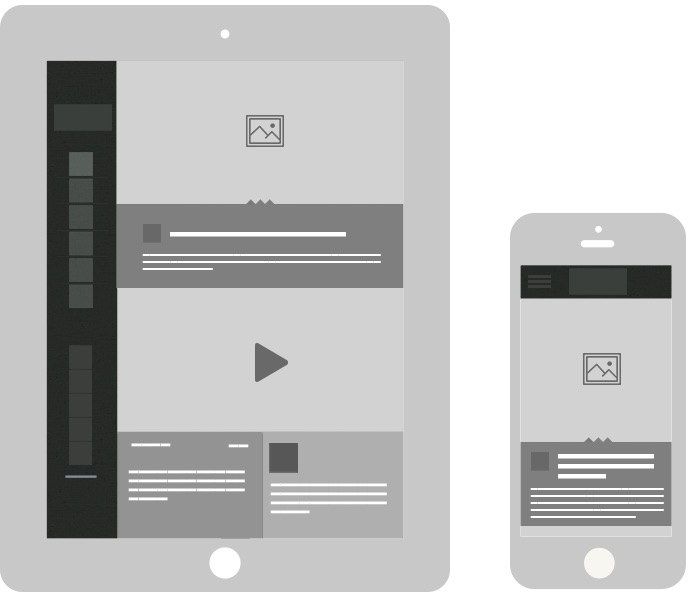
The first step was to establish a precise layout of the page and plan how the content would be organised:
- Slideshow: it could contain several major news items about Alsace wines. Visitors could scroll through them or click to go to the relevant page.
- Featured content such as site news, social media, a highlighted product, a highlighted section, a highlighted service, etc. Some items could be emphasised through their position and size.
- “Load more” button: visitors were invited to load more content on their home page.
Responsive web design
Objective
Responsive design is the set of tools that allow websites to adapt to the size of the visitor’s screen. It makes it easier to view the same content presented in different forms, whether on a computer, a tablet or a smartphone.
This evolution in web design, front-end integration and development techniques is based on a simple goal: the same site must be able to adapt itself to different screen resolutions… and so must its content!
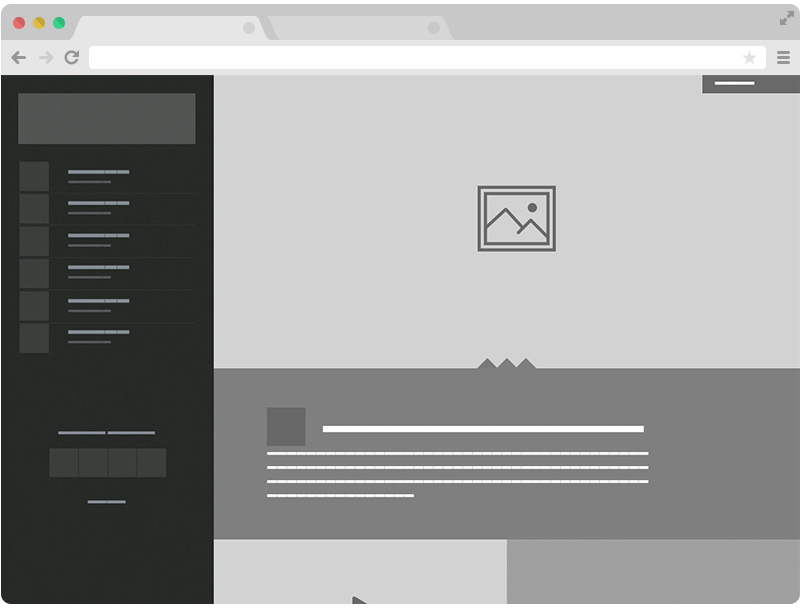
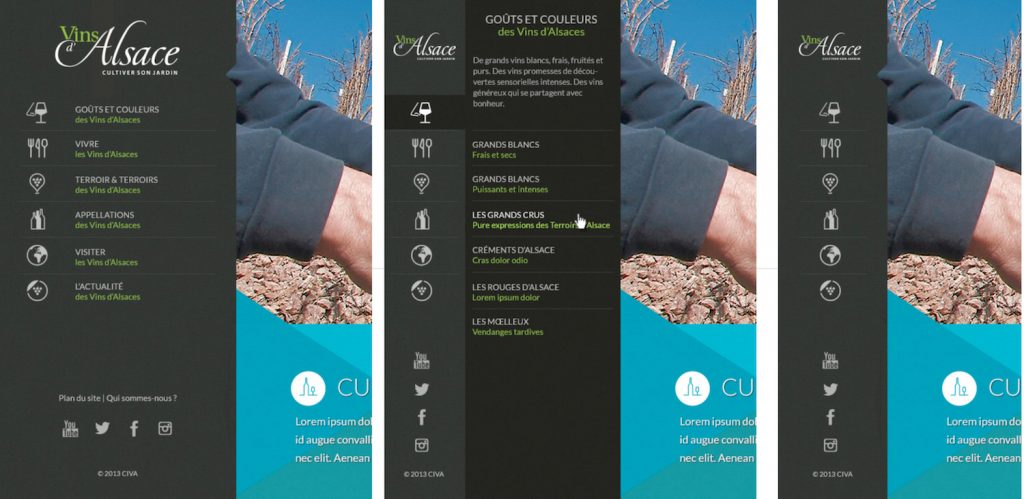
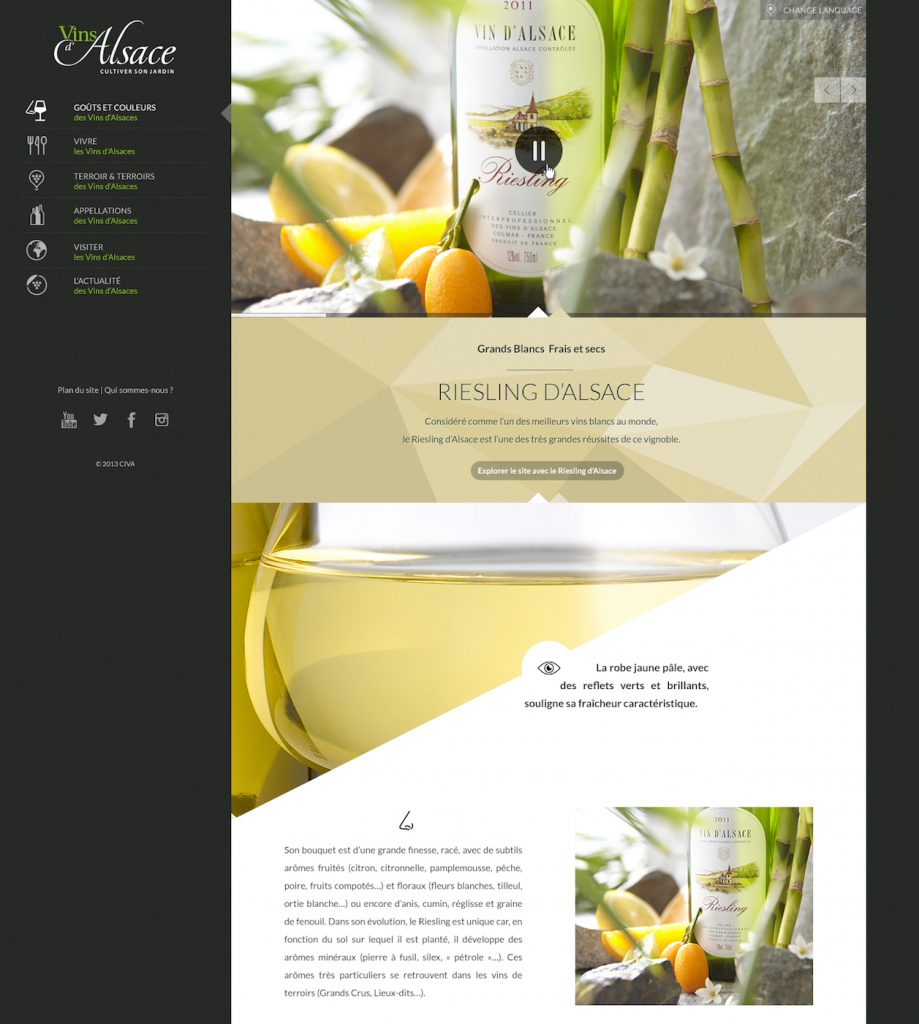
Navigation in a desktop browser
This is the one we know best. This device remains the most widely used for viewing content. It is still essential today to approach usability according to its specific dimensions.
Navigation on a tablet
The navigation pushes the content to the right to reveal the site’s sections. The navigation behaves the same way as in a desktop browser.
Navigation on mobile
The navigation pushes the content to the right to reveal the site’s sections. The navigation behaves the same way as in a desktop browser.
The navigation concept
A user-friendly site is one where navigation is intuitive. This means most visitors find the information they are looking for instinctively and quickly.
The navigation we proposed aimed to address this issue. We imagined it as a bookmark in an open book.
This bookmark (left-hand area) remained permanently fixed in the browser to reveal the various content (right-hand area), which could be scrolled in the browser.
Features
Search engine
To make its content as accessible as possible, the site would have included a search engine. We planned to use the Sphinx content indexing engine, which works on text content in different languages. A user of the English version of the site could thus find only the content written in their language.
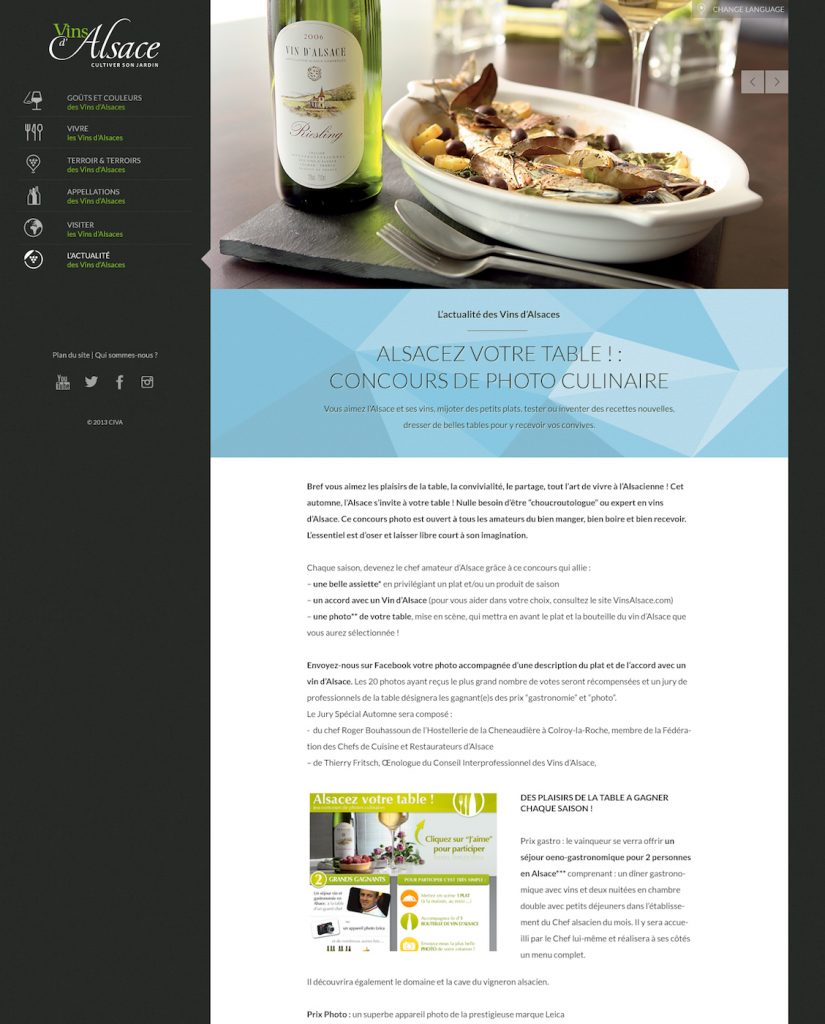
News
This section presented all the activities related to Alsace wines as a tumblelog showcasing visuals and featuring news from different feeds: internal (the site) and external (social media).
The aim was to be more of a news feed, with a prominent place given to images, to recentralise the expression of the Alsace Wine brand.
Let’s not forget that visitors also come to the site to find information about the vineyards, etc.
Social media interaction
All content could be shared on social media, extending the site’s visibility and the spread of information about Alsace wines.
RSS feeds
Content syndication was handled in RSS format, with feeds updated automatically according to the sites’ content. Providing article summaries, the RSS feeds gave visitors an easy way to select the priority information to read on the site.
The vineyard directory
This functional module could bring together all the information about the vineyards (wineries, winegrowers, etc.), and its database was also used by the interactive map.
Events
An events calendar was presented on the site to give a clear, informative view of upcoming events. For each event, a link could be added to add it directly to a calendar such as Google Calendar.
Media
Images, photos and videos could be used in two ways:
- from a media centre within the site (managing photos and videos)
- from image libraries, if an API allows it
The interactive map
Combining performance and ease of use, the interactive map would offer visitors a graphical way to explore content by interacting with it. Its technical solution would rely (subject to browser compatibility) on the services of the IGN Géoportail with OpenLayers 3. The panoramas would be integrated into a map created by Idéematic in collaboration with iRéalité.
It could show:
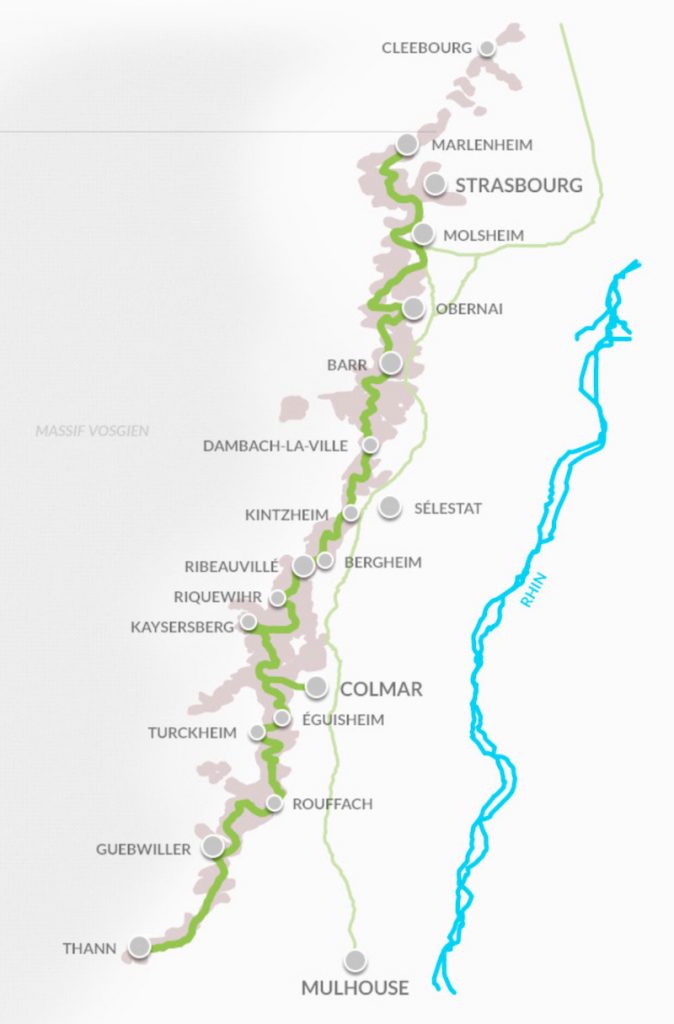
- the AOC Alsace area [iRéalité]
- the 51 grands crus [Back office]
- the 13 village AOCs [Back office]
- the route of the Wine Route [iRéalité]
- the Wine Route’s 5 wine tourism areas [iRéalité]
- around 20 points of interest in Alsace towns and villages [Back office]
- around 50 winegrowers from the vineyard directory (out of 700) [From vinsalsace.pro]
- the vineyard directory
Eventually (content in collaboration with partners):
- where to eat?
- where to taste?
- where to stay?
Simple, centralised and shared content management
Made available to the client, the site would have a simplified content update tool. Very intuitive to use, it would require no advanced IT knowledge. The main features of this content manager would be as follows:
- several people could work on the same document
- it would provide a publishing workflow
- form and content management would be kept separate
- it would make it possible to structure content
- it would include tools for prioritising information to streamline its distribution within the site (search engine, advanced hyperlinks, content category structure, RSS syndication, etc.)
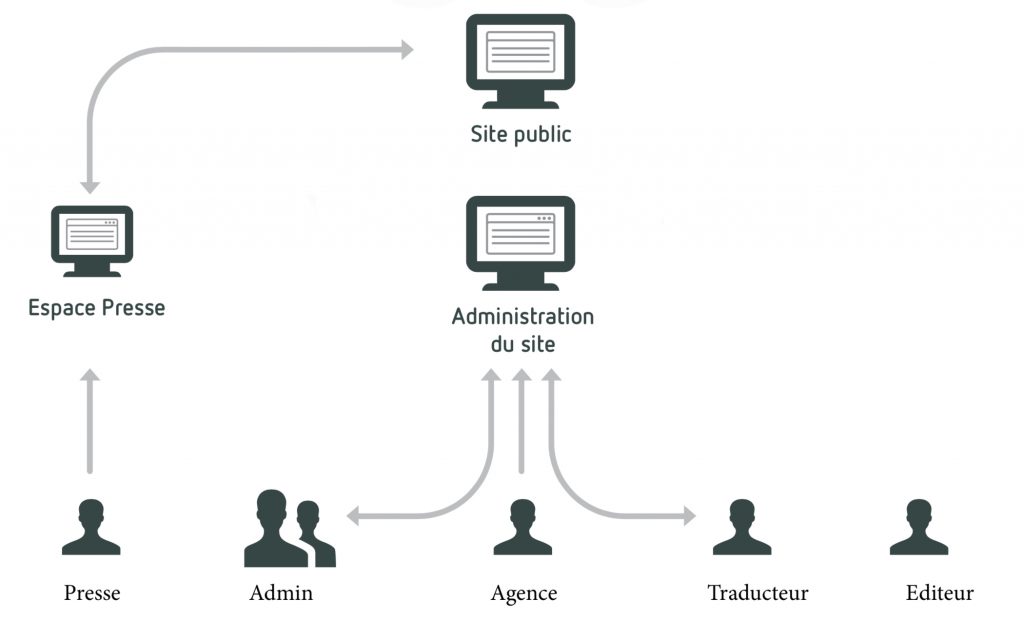
- with advanced authentication systems, it would allow tiered rights to be assigned to the various people updating the site (a basic operator submits level 1 content such as news, an advanced operator could edit main pages, the general administrator can validate and check all modified or added content)
- the system could include version control, making it possible to manage several chronological states of the site in order to roll back or track how the site has evolved.

What is the digital strategy for your website?
To deliver on its promises, your website must be able to meet the objectives you set for it. That is why it is worth defining a strategy aligned with your challenges and being able to measure your return on investment as your business grows. Our approach is naturally to offer you tailored support for promising results!