
Websites and platforms · Redesign
Website redesign, without losing what you have
Your website plays a role in your strategy. Rebuilding it means taking into account what already exists and your future objectives: content, customer accounts, links with your tools, positions gained in search engines. We redesign websites that do more than act as a shop window.
Definition
What is a website redesign?
A website redesign means rebuilding an existing website, its structure, design, features or technology, so that it meets the company’s new objectives. It keeps what has value: content, data, user accounts, links with the information system and positions in search engines.
Your website redesign must be the answer to your expectations, fulfilling the roles you give it within your sales and marketing strategies. It is a bespoke website or web platform project in its own right: it starts by analysing what works and what is missing.
When to modernise
Six signs it is time to rebuild your website
When your teams no longer use the site properly or it no longer fulfils its role, it is time to act.
The site no longer reflects what you offer
Your activities, brands or positioning have changed: the site still tells the story of yesterday’s company.
Your teams can no longer update it
Every change goes through a provider, or the admin is too rigid for your content.
Technology at the end of its life
A CMS or framework that no longer receives updates, abandoned plugins, risky hosting.
Features are missing
Customer area, catalogue, online job offers and applications, multilingual: the site no longer keeps up with how you work.
Re-keying between the site and your tools
Orders, stock, product sheets or contacts copied by hand between the site, the ERP and the CRM.
A site that is slow or not mobile-friendly
Heavy pages, difficult navigation on phones, journeys that do not lead to an enquiry.
What is preserved
Rebuild everything, without starting from scratch
Your website has a legacy: content, users, links with your management tools and search rankings built up over the years. A successful redesign changes what needs to change without losing any of that value.
Every element is inventoried during the initial review, then carried over, migrated or redirected. When the site exchanges data with your information system, the ERP, CRM and API integrations are planned in the project, not discovered at launch.
Discuss your redesignWhat we handle in every redesign, depending on your site.
Approach
A redesign in 7 steps
Once we have been able to say what needs to be done, all that remains is to do what we said. You stay at the centre of the project at every delivery.
- 1
The initial review
What the site lacks, your teams’ views and, if needed, a technical audit of its capacity to evolve.
- 2
Answers to the gaps
For each gap identified, the solution to adopt, to make the right decisions.
- 3
The resources
People, production and time, with your team and ours.
- 4
Organisation and planning
Sitemap, content, features, teams and technologies.
- 5
Production
Web design, front-end integration and development, in successive deliveries using an agile method (in French).
- 6
Go-live
Content and data migration, 301 redirect plan to keep the rankings gained.
- 7
Measurement and improvement
Analysis of traffic and visitor behaviour, then continuous improvement.
Before you decide
Redesign, evolve or take over?
A redesign is not always the right answer. The initial review lets you choose, with full knowledge of the facts, between three paths.
Evolve
If the technical foundation is sound, evolving the existing site costs less than a redesign. A technical audit can confirm this.
Redesign
If the technology, structure or features no longer keep up, a redesign starts again on lasting foundations, without losing what you have.
Take over
Was your site built by another provider? We review it before taking over its maintenance, as with the online shop Molli.
Case studies
Website and platform redesigns
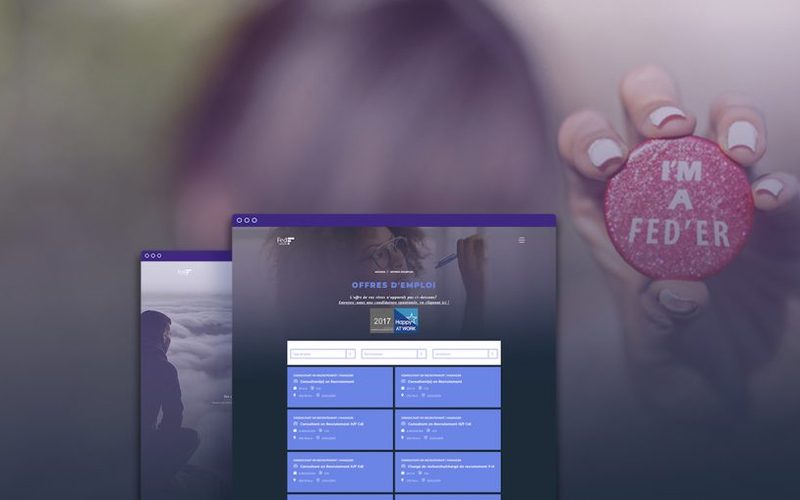
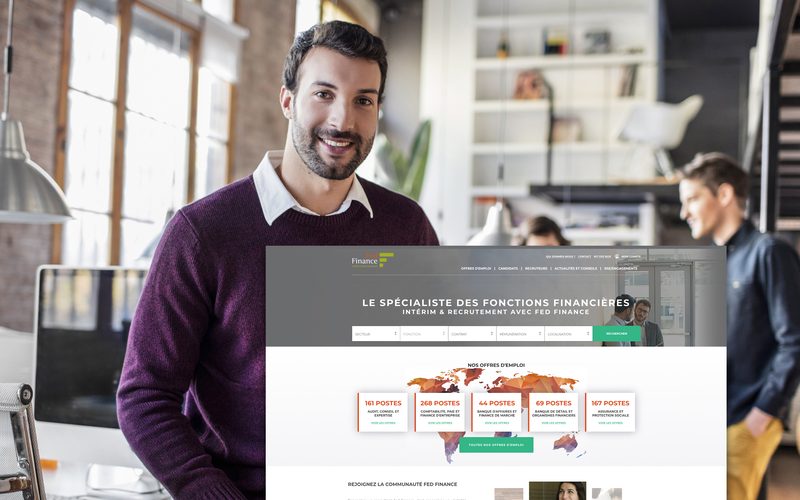
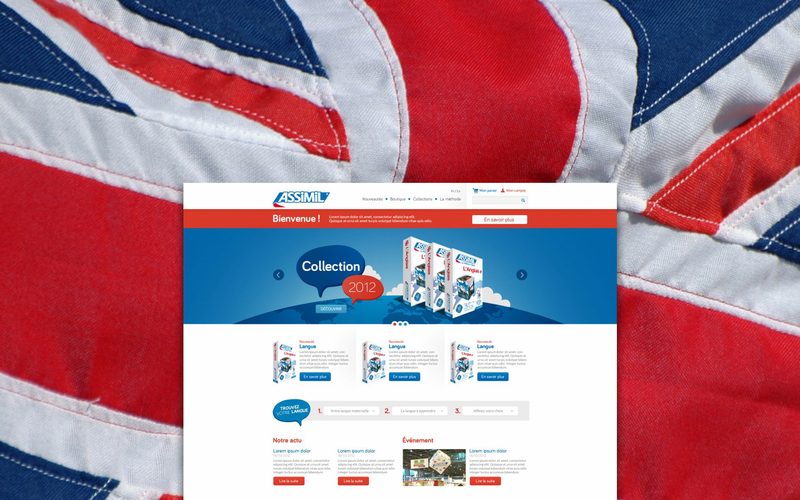
Since 2016, several Groupe FED websites have moved from Drupal to Ruby on Rails, with an admin interface designed for the group’s teams.
Frequently asked questions
When should you rebuild your website?
When it no longer reflects what you offer, your teams can no longer update it, its technology is no longer maintained, features are missing or information is re-keyed between the site and your tools. The initial review confirms whether a redesign is the right answer.
Will we lose our search rankings with the redesign?
The site has a legacy in search engines. We inventory the existing pages, carry over the content that has value and prepare a 301 redirect plan, implemented at launch, so that old addresses lead to the new ones.
Can we keep our content, customer accounts and data?
Yes. Content, user accounts, orders or product sheets are carried over and migrated to the new site. Links with your ERP, CRM or other tools are planned from the design stage.
Do we need to change technology?
Not necessarily. If the current technology is still maintained and suitable, we keep it. Several Groupe FED websites moved from Drupal to Ruby on Rails because their needs required it. For a WordPress site, a WordPress audit helps you decide. If your teams lack autonomy to publish, a bespoke or headless CMS can replace the old tool.
Redesign or evolve the existing site: how to choose?
If the technical foundation is sound, evolving the existing site is often preferable. A technical audit measures its capacity to evolve and guides the decision.
Can you redesign a site built by another agency?
Yes. We start by reviewing the site and its code, then propose either to redesign it or to take over its maintenance, as we did for the Molli online shop.
A website redesign project?
Tell us about your current site and your objectives: we will propose a suitable approach, from the initial review to launch.